

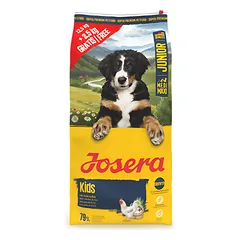
Josera
Josera Kids 12,5kg + 2,5kg = 15 kg
1,38 €/kg
37,89 € / 27,5 kg

The Perdigueiro Português is considered one of the oldest pointing breeds on the Iberian Peninsula, mentioned in Portuguese royal documents as far back as the 13th century as a bird-finding hunting dog. The short, dense coat and compact, sturdy frame, up to 27 kilograms, let the breed work through Portugal's hot, dry climate, where stamina counted for more than raw speed. It nearly disappeared by the mid-20th century until a small group of Portuguese breeders rebuilt it from surviving rural dogs. In temperament it is friendly, calm, and devoted to its family, turning notably focused once it is out working a field. It is still seen far more often in the field than in the show ring outside Portugal. Life expectancy runs 12 to 14 years.
Browse dog food sized right for this breed
Portuguese Pointer: how old in human years?
Energy level
Trainability
Family friendly
Grooming need
Males 52–56 cm
Females 50–54 cm
Males 16–27 kg
Females not specified
Portuguese Pointer's average temperament and family-life score for this breed is moderate.
Portuguese Pointer's energy and exercise needs are high.
Portuguese Pointer's guarding and alertness traits are low.
Portuguese Pointer's grooming needs are low.
A chin comes to rest on your knee, and a pair of amber eyes asks when you are finally going out to the fields. The Portuguese Pointer is an old Portuguese gundog, medium-sized and light on his feet, and he combines two things in a slightly unexpected way: a tireless hunter's engine and a strong wish to be right next to his person.
He needs a lot of exercise: a long walk every day and free running somewhere safe, better still with search games, retrieving or hunting. He learns quickly and willingly because he wants to please, so praise and consistency work best, while a harsh tone only confuses him. His prey drive and hunting instinct are very strong, so be patient with recall training and careful around cats and small animals.
At home he is gentle and affectionate, good with children, usually fine with other dogs, and polite with strangers. He barks little and is no guard. Long hours alone are hard on him and a flat is too small; he does best with an active family or a hunter who has a garden and finds time for the fields every day.
A square head, a serious expression and a short, dense coat that takes a few minutes a week to look after. The Portuguese Pointer sheds little, so a weekly once-over with a rubber brush or grooming mitt to lift the dead hair keeps the coat smooth and glossy. Bathe him only now and then, when he has properly got himself dirty.
Hanging ears can bring home seeds or ticks after a walk in the fields, so check them every week; redness, discharge or a bad smell is a reason to see a vet. After outings look over the paw pads and belly for scratches, and trim the nails if they don't wear down on their own. A short coat offers little protection from the cold, so in winter it's worth towelling him dry after a long walk.
We don't have reliable health information specific to this breed, so we don't list conditions here. Keep up regular vet check-ups, and if you are getting a puppy, ask the breeder about the parents' health testing.
This is general information, not veterinary advice. For your own dog's health, tests and treatment, see a vet.
This list is chosen by the breed's weight (27 kg) rather than the breed itself: shops label food by dog size, so every breed of the same size gets the same list. Prices are updated daily.
≈ 295 g of dry food a day, from €16,14 a month For a neutered, normally active 21,5 kg dog. Calculate for your dog
Josera
1,38 €/kg
37,89 € / 27,5 kg

Sam's Field
1,80 €/kg
26,99 € / 15 kg

Country Dog
1,89 €/kg
28,29 € / 15 kg

Club 4 Paws
1,92 €/kg
26,94 € / 14 kg
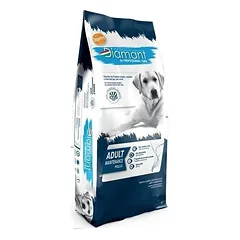
Diamant
1,93 €/kg
28,99 € / 15 kg
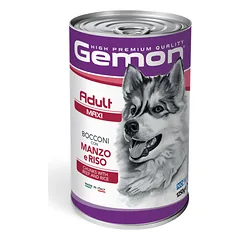
Gemon
1,94 €/kg
2,42 € / 1,3 kg

BIO FORM
2,00 €/kg
40,00 € / 20 kg

BIO FORM
2,00 €/kg
40,00 € / 20 kg