

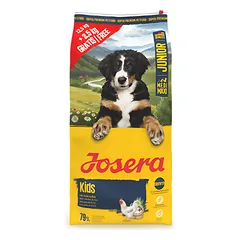
Josera
Josera Kids 12,5kg + 2,5kg = 15 kg
1,38 €/kg
37,89 € / 27,5 kg

Also known as: Canary Island Podenco
The Podenco Canario comes from the Canary Islands, where it hunted rabbits for centuries over dry, rocky terrain, relying less on scent than on remarkably sharp sight and hearing. An adult weighs around 25 kilograms on a lean, long-legged frame with large, upright ears that give it a permanently alert look. The short, smooth coat suits the hot island climate well but offers little protection against cold. The breed is still used mainly for hunting in small groups rather than purely as a family dog. It has a habit of leaping straight up while running to spot prey over tall grass, a trait typical of podenco-type breeds. It tends to be reserved but not aggressive with strangers. Life expectancy runs 10 to 13 years.
Browse dog food sized right for this breed
Podenco Canario: how old in human years?
Energy level
Trainability
Family friendly
Grooming need
Males 55–64 cm
Females 53–61 cm
Males 20–25 kg
Females 20–25 kg
Podenco Canario's average temperament and family-life score for this breed is low.
Podenco Canario's energy and exercise needs are high.
Podenco Canario's guarding and alertness traits are low.
Podenco Canario's grooming needs are low.
A sandy slope, rocks, and a flicker of movement between the stones: before you have worked out what it was, your Podenco Canario is already halfway there. The breed comes from the Canary Islands, where it was used to hunt rabbits, and it has everything that job demands – a sharp nose, keen ears and eyes, and fast legs. Its prey drive is about as strong as a dog's gets, and that shapes nearly everything about daily life with one.
A lead outdoors isn't a recommendation but a rule, unless you are somewhere safely fenced. It needs a good run every day, yet indoors it is often surprisingly calm, happy with a soft bed and a warm corner. Training is slowish going: it isn't dim, its head is just full of scents and sounds. Gentle, short, patient lessons with treats work better than firmness, which it dislikes.
With its own people a Podenco Canario is affectionate, and it isn't aggressive with strangers, just keeps its distance. It tends to get on with other dogs, especially ones it grew up with, but a cat or a pet rabbit at home is a risk you need to think through carefully. The garden fence must be high and without gaps: this dog jumps easily and without ceremony.
A Podenco Canario has a short, smooth, close-lying coat, so grooming is almost a formality. Once a week, run a rubber mitt or a soft brush over it to lift out dead hair and bring up the shine. It doesn't shed much, so you won't be de-furring the sofa every day.
A bath is only needed after your dog has rolled in something it shouldn't have. A short coat offers little protection from cold or scratches, so after a run through scrub check the skin and paws, and in winter a coat may help on longer walks. Glance inside those huge upright ears now and then, and trim the nails if they don't wear down by themselves.
We don't have reliable health information specific to this breed, so we don't list conditions here. Keep up regular vet check-ups, and if you are getting a puppy, ask the breeder about the parents' health testing.
This is general information, not veterinary advice. For your own dog's health, tests and treatment, see a vet.
This list is chosen by the breed's weight (25 kg) rather than the breed itself: shops label food by dog size, so every breed of the same size gets the same list. Prices are updated daily.
≈ 305 g of dry food a day, from €16,70 a month For a neutered, normally active 22,5 kg dog. Calculate for your dog
Josera
1,38 €/kg
37,89 € / 27,5 kg

Sam's Field
1,80 €/kg
26,99 € / 15 kg

Country Dog
1,89 €/kg
28,29 € / 15 kg

Club 4 Paws
1,92 €/kg
26,94 € / 14 kg

Diamant
1,93 €/kg
28,99 € / 15 kg
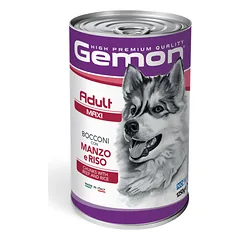
Gemon
1,94 €/kg
2,42 € / 1,3 kg

BIO FORM
2,00 €/kg
40,00 € / 20 kg

BIO FORM
2,00 €/kg
40,00 € / 20 kg