

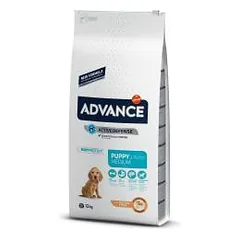
Advance
Advance Puppy Medium sausas maistas vidutinių veislių šuniukams, 12 kg
1,48 €/kg
17,76 € / 12 kg

Also known as: Jindo, Korean Jindo, Chindo, Jindo Gae, Chindokkae
The Korea Jindo Dog comes from Jindo Island in South Korea, where it developed in near isolation and was used to hunt small game and guard homes. An adult weighs around 23 kilograms on a compact, muscular frame with a dense double coat that handles both cold and heat. South Korea treats the breed as a national treasure, and its export was tightly restricted for decades. Jindos are known for near-obsessive loyalty to a single owner, with well-documented stories of dogs traveling hundreds of kilometers to find their way back to a previous home. The breed is highly independent and can be difficult to manage without real effort put into early socialization. It tends to be naturally reserved with strangers, sometimes avoiding contact with them altogether. Life expectancy runs 12 to 15 years.
Browse dog food sized right for this breed
Korea Jindo Dog: how old in human years?
Energy level
Trainability
Family friendly
Grooming need
Males 50–55 cm
Females 45–50 cm
Males 18–23 kg
Females 15–19 kg
Korea Jindo Dog's average temperament and family-life score for this breed is moderate.
Korea Jindo Dog's energy and exercise needs are moderate.
Korea Jindo Dog's guarding and alertness traits are high.
Korea Jindo Dog's grooming needs are moderate.
You come home from work, and your Korea Jindo Dog is already waiting at the door, as if it heard your car two streets away. It may well have. This is a dog that bonds very strongly with its person and spends the day keeping an eye on everything happening on its patch. It is a watchful guardian but not a noisy one: it barks when it has something to say.
It has energy to spare, so it needs long walks every day, a chance to run free somewhere secure, and things to think about. It learns quickly but treats repetition as an insult, so keep sessions short and interesting. The hunting instinct is strong: a cat or a hare can override any command in an instant, and a high fence is a challenge to a Jindo, not an obstacle.
It is reserved with strangers and may not get on with other dogs, particularly of the same sex, so early and patient socialisation matters a great deal. With its family it is gentle and loyal, but it likes its own space and doesn't always want to be cuddled. If you like an independent, dignified dog that doesn't demand constant attention but will never let you down, a Jindo will be a real discovery.
A Jindo wears a medium-length double coat: harsh outer hair over a soft, dense undercoat. Go over it with a brush and comb down to the skin once or twice a week, and twice a year, when the undercoat changes, expect near-daily sessions and fistfuls of fluff. As you brush, look at the skin for redness, flakes or bald patches, and don't forget to check the nose.
Jindos are known for being clean and groom themselves much like cats, so they rarely need a bath. Check the eyes while you are grooming: they should be bright and clear, with no discharge. Look inside the upright ears once a week, and if you see dirt or notice a smell, ask your vet.
The Korea Jindo Dog is a medium-sized, sturdy dog built for a long and active life. There are still a couple of health issues worth knowing about so that you notice changes in time. If you are getting a puppy, ask the breeder about the parents' health testing.
This is general information, not veterinary advice. For your own dog's health, tests and treatment, see a vet.
This is a condition in which the immune system mistakenly turns on the dog's own skin, especially on the nose. You might see the black skin of the nose fading in colour, flaking or developing small sores. A Jindo's nose is always out in front, so give it a look during your weekly once-over and show any changes to your vet.
The thyroid gland makes too little hormone, and the whole body slows down. A Jindo is alert and lively, so if yours becomes sluggish for no clear reason, gains weight or starts to lose coat, take note. Whether it is hypothyroidism is for your vet to find out.
This list is chosen by the breed's weight (23 kg) rather than the breed itself: shops label food by dog size, so every breed of the same size gets the same list. Prices are updated daily.
≈ 265 g of dry food a day, from €14,60 a month For a neutered, normally active 18,8 kg dog. Calculate for your dog
Advance
1,48 €/kg
17,76 € / 12 kg
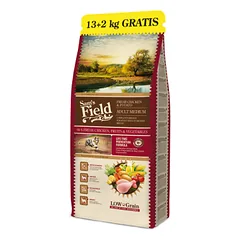
Sam's Field
1,80 €/kg
26,99 € / 15 kg

Country Dog
1,89 €/kg
28,29 € / 15 kg
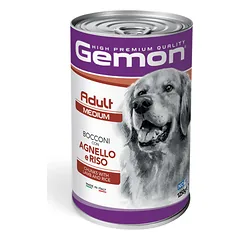
Gemon
1,94 €/kg
2,42 € / 1,3 kg
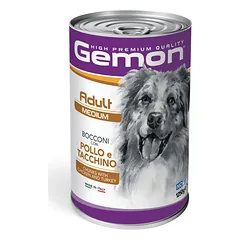
Gemon
1,94 €/kg
2,42 € / 1,3 kg
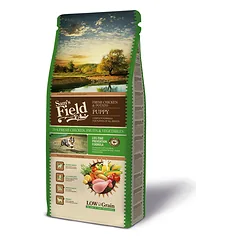
Sam's Field
2,11 €/kg
27,45 € / 13 kg
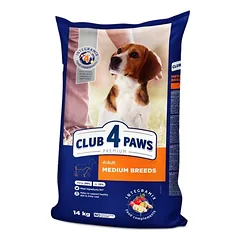
2,14 €/kg
30,00 € / 14 kg
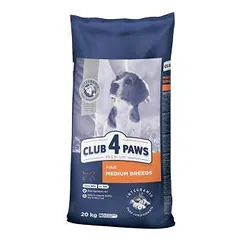
Club 4 Paws
2,15 €/kg
42,99 € / 20 kg