

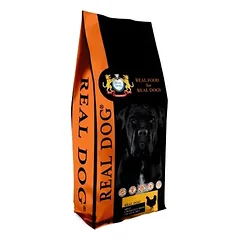
Real Dog
Real Dog sausas maistas suaugusiems, didelių-milžiniškų veislių, šunims su vištiena ir ryžiais 20kg
2,11 €/kg
42,15 € / 20 kg

The Otterhound was bred in England to hunt otters, once regarded as pests that damaged river fisheries, and that job explains almost everything about the breed's build. The rough double coat with its oily, water-resistant outer layer sheds water, while webbed feet let it swim nearly as efficiently as it runs on land. When otter hunting was banned in Britain in 1978, the breed lost its original purpose and is now among the rarest in the world, with fewer than a thousand living dogs. A male can weigh up to 52 kilograms, large but not clumsy, built for long swims in cold water. A deep, carrying bark was a genuine working asset, audible over noisy river currents at distance. Life expectancy runs 10 to 13 years.
Browse dog food sized right for this breed
Otterhound: how old in human years?
Energy level
Trainability
Family friendly
Grooming need
Males 61–69 cm
Females 61–66 cm
Males 30–52 kg
Females 30–45 kg
Otterhound's average temperament and family-life score for this breed is high.
Otterhound's energy and exercise needs are high.
Otterhound's guarding and alertness traits are low.
Otterhound's grooming needs are moderate.
Your Otterhound has seen the river. A minute later he is in it, swimming calmly as if that were the natural order of things, nosing at the surface and in no hurry to come back. This big, shaggy British breed was made to hunt otters in water, so water, scents and long rambles are his recipe for happiness. He is cheerful, good-natured and a little comic, one of those dogs who make you laugh without trying.
He has plenty of energy and needs long walks every day, ideally out in the country. He does learn, but at his own pace: his nose often outranks your commands, so bring patience, treats and a sense of humour. Once he catches a scent he can wander far, so let him run free only somewhere safely fenced. And get ready for the voice: a deep hound bay comes out when something truly interests him.
With his family he is a gentle giant, patient with children, friendly with other dogs, and inclined to greet strangers with a wagging tail, so don't count on him as a guard. A flat is a tight fit for a dog this big, busy and drooly; a house with a garden and woods or a river nearby is paradise. A typical day ends with a wet, muddy, deeply satisfied dog on the towel by the door.
The Otterhound's coat is rough, shaggy and slightly oily, made for a dog who spends hours wading in a cold river without getting chilled. That kind of coat mats easily behind the ears, in the armpits and on the legs, so go through it with a brush and comb once or twice a week, and always after a swim. Don't trim him into tidiness: the rough, naturally scruffy look is half the breed's charm. His beard carries off half the water bowl after every drink, and some of dinner too, so keep a damp cloth handy.
Check the skin under that dense coat with your fingers, and show any redness, scabs or smell to your vet. The long, hanging ears are warm and damp, so look inside them every week and dry them after each swim. Watch his eyes for redness or discharge, and keep his nails short, which matters on feet that size.
The Otterhound is a big, sturdy dog, and what you should know about his health comes down to that size and to inheritance. The conditions below are worth knowing in advance: some need a vet urgently, others develop slowly. Before you take a puppy home, ask the breeder about the parents' health testing, and keep up regular check-ups afterwards.
This is general information, not veterinary advice. For your own dog's health, tests and treatment, see a vet.
The stomach fills with gas and can twist on itself, cutting off its own blood supply. You might see a swollen, tight belly, restlessness and retching that brings nothing up. A large, deep-chested dog like the Otterhound is the kind of dog this applies to, so if you suspect bloat he needs a vet immediately.
The hip joint forms loosely, so it wears and becomes painful over time. You might notice him getting up more slowly, hesitating at the stairs or limping after a long walk. A heavy dog like the Otterhound puts real load on his joints, so ask the breeder about the parents' health testing.
Epilepsy means repeated seizures that start in the brain itself. During one, a dog may fall over, paddle or twitch, drool or briefly lose consciousness. If your Otterhound has a seizure he needs a vet immediately, and the vet decides what comes next.
This is an inherited problem in which the blood platelets don't work as they should, so blood clots too slowly. You might notice nosebleeds, bleeding gums, unexplained bruising or a small cut that keeps bleeding. Ask the breeder about the parents' health testing, and make sure your vet knows the breed's background.
This list is chosen by the breed's weight (52 kg) rather than the breed itself: shops label food by dog size, so every breed of the same size gets the same list. Prices are updated daily.
≈ 465 g of dry food a day, from €25,38 a month For a neutered, normally active 39,3 kg dog. Calculate for your dog
Real Dog
2,11 €/kg
42,15 € / 20 kg
Sam's Field
2,56 €/kg
33,26 € / 13 kg
Rasco
2,67 €/kg
39,99 € / 15 kg
Rasco
2,67 €/kg
39,99 € / 15 kg
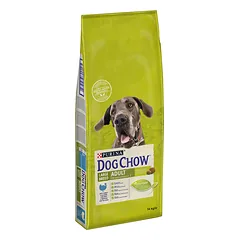
Purina
2,71 €/kg
37,96 € / 14 kg
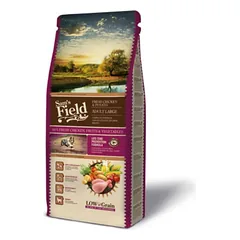
Sam's Field
2,77 €/kg
35,99 € / 13 kg
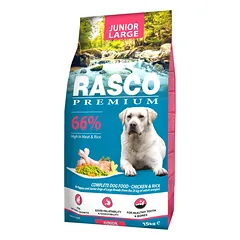
Rasco
2,80 €/kg
41,99 € / 15 kg
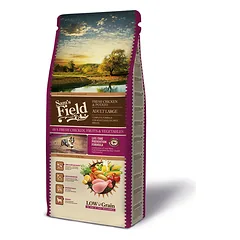
Sam's Field
2,85 €/kg
37,04 € / 13 kg