

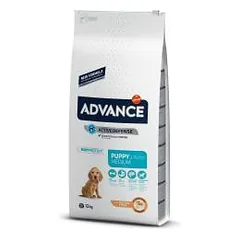
Advance
Advance Puppy Medium sausas maistas vidutinių veislių šuniukams, 12 kg
1,48 €/kg
17,76 € / 12 kg

The Norwegian Buhund is an ancient spitz-type breed, used for centuries on Norwegian farms to herd sheep and guard the homestead, with archaeological finds suggesting similar dogs were buried alongside Vikings. The word bu in Old Norse means farm or homestead. The double coat, with a dense, harsh outer layer, handles cold climates well and blows out heavily twice a year. A build up to 18 kilograms stays compact and agile, suited to long working days outdoors. This is an alert, energetic breed that needs regular activity and tends to bark at anything out of the ordinary. Life expectancy runs 12 to 15 years.
Browse dog food sized right for this breed
Norwegian Buhund: how old in human years?
Energy level
Trainability
Family friendly
Grooming need
Males 43–47 cm
Females 41–45 cm
Males 14–18 kg
Females 12–16 kg
Norwegian Buhund's average temperament and family-life score for this breed is high.
Norwegian Buhund's energy and exercise needs are moderate.
Norwegian Buhund's guarding and alertness traits are moderate.
Norwegian Buhund's grooming needs are low.
A curled tail, pricked ears and a look that asks, "What are we doing next?" The Norwegian Buhund comes from farms where it herded livestock and kept an eye on the yard, so it likes having a job and being wherever something interesting is happening. It is energetic without being frantic: a long morning walk, a game or a training session during the day and an evening loop round the block will suit it well.
It learns willingly and quickly works out what you want, especially when lessons are short, cheerful and rewarded. With its family it is gentle and affectionate, and it usually gets on well with children and other dogs. Strangers get a cautious kind of politeness, though you will hear about every step they take.
And that is its main drawback: the Buhund likes to bark. It will announce the postman, the neighbour's cat and a leaf that landed somewhere it shouldn't have. Flat life is possible if you give it enough exercise and teach it from puppyhood when enough is enough. In the evening, properly tired, it will happily settle beside you and wait patiently for the next thing to happen.
A Norwegian Buhund's coat is built for wind and rain: a short, harsh outer coat over a dense, soft undercoat. For most of the year a once-a-week brush is enough to lift out dead hair and dust. Mud doesn't cling to this coat for long; once it dries, much of it simply falls off, so baths can be rare.
The real work comes when the undercoat changes. Hair starts coming out in tufts, and that is the time to brush several times a week, ideally outdoors. The coat never needs clipping. Keep the nails from growing too long, look at the ears and teeth, and after a walk through the woods run your hands over the coat for ticks.
We don't have reliable health information specific to this breed, so we don't list conditions here. Keep up regular vet check-ups, and if you are getting a puppy, ask the breeder about the parents' health testing.
This is general information, not veterinary advice. For your own dog's health, tests and treatment, see a vet.
This list is chosen by the breed's weight (18 kg) rather than the breed itself: shops label food by dog size, so every breed of the same size gets the same list. Prices are updated daily.
≈ 225 g of dry food a day, from €12,33 a month For a neutered, normally active 15 kg dog. Calculate for your dog
Advance
1,48 €/kg
17,76 € / 12 kg
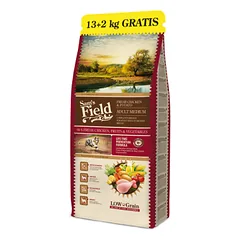
Sam's Field
1,80 €/kg
26,99 € / 15 kg

Country Dog
1,89 €/kg
28,29 € / 15 kg
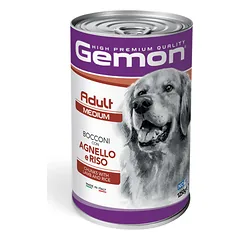
Gemon
1,94 €/kg
2,42 € / 1,3 kg
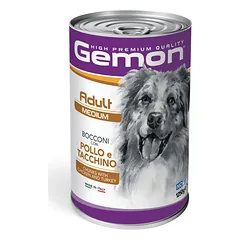
Gemon
1,94 €/kg
2,42 € / 1,3 kg
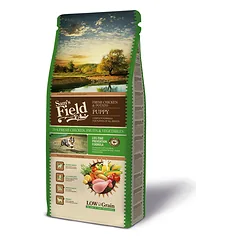
Sam's Field
2,11 €/kg
27,45 € / 13 kg

2,14 €/kg
30,00 € / 14 kg
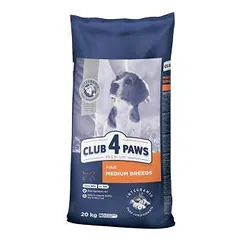
Club 4 Paws
2,15 €/kg
42,99 € / 20 kg