


VetExpert
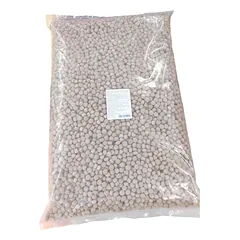
Raw Paleo Dog Ultra Mini Puppy Beef 750 kg
0,02 €/kg
13,09 € / 750 kg

Also known as: Little Lion Dog
The Lowchen, French for Petit Chien Lion, takes its name from the traditional clip that leaves the front heavily coated and shaves the rear, mimicking a lion's mane. The trim is not just decoration, it dates back to medieval belief that the style helped ward off evil spirits. The long, wavy coat needs regular brushing, more so if the classic lion trim is kept up. Weighing only around 8 kilograms, the breed is playful and more energetic than its dainty look suggests, and it tends to want to be part of every family activity. Once listed as one of the rarest breeds in the world, it remains less common today than other bichon-type dogs. Life expectancy runs 13 to 15 years.
Browse dog food sized right for this breed
Lowchen: how old in human years?
Energy level
Trainability
Family friendly
Grooming need
Males 25–33 cm
Females 25–33 cm
Males 4–8 kg
Females 4–8 kg
Lowchen's average temperament and family-life score for this breed is high.
Lowchen's energy and exercise needs are moderate.
Lowchen's guarding and alertness traits are moderate.
Lowchen's grooming needs are low.
A lion's mane, a lapdog's weight and the self-assurance of actual royalty. This small French companion weighs only a few kilos, yet it walks into a room as though it owned the place, and it soon finds the comfiest spot next to you.
It is cheerful, curious and happy to learn, so tricks, obedience work or even a small agility course feel like a party to it. A few walks a day and some games indoors are enough, which makes it a very good fit for a flat. It does not like being left alone for long: this is a dog that wants to take part in your day, not wait for it to end by the door.
It gets on well with children and other dogs and greets visitors warmly, though it announces their arrival first with a ringing bark. Small children should learn that a dog this size is not a toy to be carried about. Its favourite evening is curled up on your lap, and if you have a garden, one patch of sun on the grass is all it takes for it to feel like a king again.
The traditional Lowchen clip, with the hindquarters and legs cut short, a long mane in front, a plume on the tail and cuffs of hair at the ankles, looks like a joke, but it is the old hallmark of the breed and the reason for its name, little lion dog. The long, wavy coat barely sheds, which is exactly why it tangles: dead hair stays in the coat. Comb it right down to the skin several times a week, and plan on a groomer every few weeks; if the lion's mane isn't for you, a short, even trim is far easier to keep.
Wherever the coat is clipped short, the skin is exposed to sun and cold, so give your dog shade on summer days and consider a jumper on a bitter winter one. As you comb, check the skin for redness and ticks. Wipe the corners of the eyes with a damp cloth, keep the hair around them trimmed so it doesn't poke, and look into the drop ears once a week, because the hair inside traps dirt and moisture.
Small but sturdy, a Lowchen can keep you company for thirteen to fifteen years. A few conditions are linked to the breed, touching the knee and hip joints and the eyes, so it pays to watch how your dog runs and how it sees in dim light, and not to put every change down to age. If you are getting a puppy, ask the breeder about the parents' health testing.
This is general information, not veterinary advice. For your own dog's health, tests and treatment, see a vet.
The kneecap, a small bone at the front of the knee, can slip sideways out of its groove, and for a moment the leg seems to lock. You might see your Lowchen suddenly lift a hind leg mid-run, skip a few steps on three, then carry on as if nothing happened. Show that skipped step to a vet, even if your dog seems to think it was nothing.
The hip joint forms unevenly, so over time it wears and starts to hurt. A small dog hides this well: you might only notice that your Lowchen no longer wants to jump onto the sofa, climb stairs or walk for long. Changes like these are worth talking over with a vet rather than putting down to laziness.
A cataract is a clouding of the lens of the eye: the clear lens turns milky, and the dog sees less and less well through it. You might notice a bluish-white tinge in the pupil, though the long hair on the face hides it easily, so it is worth parting it now and then and looking your dog in the eye. If you see changes in its sight, take your Lowchen to a vet.
In this inherited disease the retina slowly wastes away; vision in dim light goes first, and later daytime sight too. You might notice your dog moving hesitantly in an unfamiliar place in the evening, or failing to find a toy in a dark room. It isn't painful, and a dog living in a familiar home adapts remarkably well, but show any change in sight to a vet all the same.
This list is chosen by the breed's weight (8 kg) rather than the breed itself: shops label food by dog size, so every breed of the same size gets the same list. Prices are updated daily.
≈ 115 g of dry food a day, from €6,19 a month For a neutered, normally active 6 kg dog. Calculate for your dog
VetExpert
0,02 €/kg
13,09 € / 750 kg
1,70 €/kg
17,02 € / 10 kg
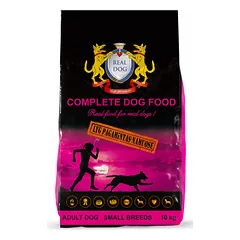
Real Dog
1,78 €/kg
17,79 € / 10 kg
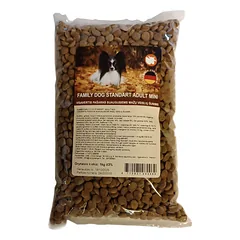
Family Dog
1,89 €/kg
1,89 € / 1 kg
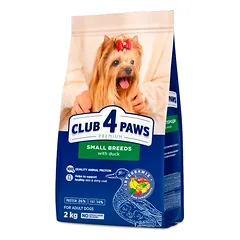
Club 4 Paws
1,93 €/kg
26,99 € / 14 kg
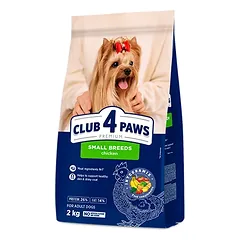
Club 4 Paws
1,93 €/kg
26,99 € / 14 kg
Real Dog
1,94 €/kg
19,42 € / 10 kg
Real Dog
1,95 €/kg
19,49 € / 10 kg