

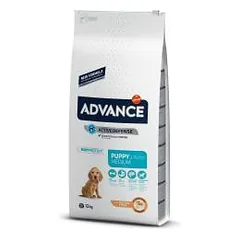
Advance
Advance Puppy Medium sausas maistas vidutinių veislių šuniukams, 12 kg
1,48 €/kg
17,76 € / 12 kg

Also known as: Karelian Bear Laika
In Finland and Karelia this breed was shaped for one job: track large game, including bear, and hold it in place with loud, sustained barking until the hunter caught up. That work explains the tough, independent temperament and strong territorial streak that make it a poor fit for first-time owners or multi-pet households. The frame is compact, rarely over 23 kilograms, but dense and built to withstand cold thanks to a thick double coat. Black with white markings is the near-universal color pattern. Finnish hunters still use the breed for its original purpose rather than as a companion dog. It needs an experienced handler and firm structure from puppyhood. Life expectancy runs 11 to 13 years.
Browse dog food sized right for this breed
Karelian Bear Dog: how old in human years?
Energy level
Trainability
Family friendly
Grooming need
Males 54–60 cm
Females 49–55 cm
Males 20–23 kg
Females 17–20 kg
Karelian Bear Dog's average temperament and family-life score for this breed is low.
Karelian Bear Dog's energy and exercise needs are high.
Karelian Bear Dog's guarding and alertness traits are high.
Karelian Bear Dog's grooming needs are moderate.
Somewhere among the spruces comes a sharp, unrelenting bark: your Karelian Bear Dog has found something and is telling the whole forest about it. That is what it was bred for: find big game, hold it at bay with its voice and stand its ground until the hunter arrives. That courage, independence and voice come with it into town as well.
It has energy enough for two dogs, so it needs long daily hikes, running, woodland, and work for its nose and its head. A flat is too small for it, and the yard needs a sound fence: once it catches the scent of an animal, it simply won't hear you calling. It learns quickly, but only what it sees the point of, so keep training short, consistent and interesting.
With other dogs, especially of the same sex, it can be very hard to get along, so socialisation from the first days is essential and park meetings need thought. With its own people it is devoted without being fawning, and it watches strangers from a distance. This is a dog for an experienced owner who is at home in the forest and doesn't mind a noisy housemate.
A Karelian's coat is built for a Finnish winter: harsh, straight outer hair over a dense undercoat. For most of the year a weekly brush is enough, but when the undercoat goes it comes out by the handful, and then the brush comes out daily. It needs no clipping and only gets a bath when it has rolled in something it shouldn't have. Feel the skin as you brush; after a forest outing there may be ticks or scratches hiding there.
Check the upright ears once a week, especially after walks in the woods, where needles and seeds find their way in. Look at the eyes in daylight: clean, bright, no discharge. An active dog wears its nails down on its own, though not always evenly, so look them over now and then.
A working dog of the northern forests, sturdy and enduring, and its medium size does it no harm. A Karelian Bear Dog can reach eleven to thirteen years, but a few inherited conditions of the eyes, joints and bone growth are described in the breed and worth knowing. If something seems off, let a vet decide what it means.
This is general information, not veterinary advice. For your own dog's health, tests and treatment, see a vet.
This is an inherited disease in which the retina at the back of the eye slowly wastes away and the dog gradually loses its sight, starting in dim light. You might notice your dog hesitating in a dark yard in the evening, bumping into things, or reluctant to jump out of the car. A Karelian trusts its nose and ears a great deal and can hide failing eyesight for a long time, so ask the breeder about the parents' health testing.
A cataract is a clouding of the lens inside the eye that makes the world look increasingly hazy. You might see a greyish or bluish tint in the pupil, or notice your dog losing track of a thrown toy. Good eyesight matters to a busy forest dog like this one, so show any change in the eye to a vet.
The hip joint forms loosely and wears faster than it should. The dog may get up stiffly after rest, bunny-hop with both hind legs together at a run, or shorten its stride. A Karelian that can range through the woods for hours needs sound hips, so tell your vet about any limp.
This is an inherited bone growth disorder that leaves the legs shorter than they should be for the size of the body. You might notice a puppy clearly falling behind its littermates in height, with legs that look short or slightly bowed. A Karelian Bear Dog should be a leggy, light runner, so if you have doubts, ask the breeder about the parents' health testing before you buy.
This name covers a disorder of cartilage and bone development in which the long bones of the legs grow abnormally. A puppy may find running harder, and its limbs may look uneven or shortened. It is inherited, so when choosing a Karelian puppy, ask the breeder about the parents' health testing, and see a vet if anything about its growth looks odd.
This is an inherited metabolic disease that keeps bones and teeth from mineralising properly. In a young dog it can show as sore, weak legs, difficulty moving or teeth that fall out early. If your Karelian puppy isn't growing the way it should, take it to a vet, and before you buy, ask the breeder about the parents' health testing.
This list is chosen by the breed's weight (23 kg) rather than the breed itself: shops label food by dog size, so every breed of the same size gets the same list. Prices are updated daily.
≈ 280 g of dry food a day, from €15,29 a month For a neutered, normally active 20 kg dog. Calculate for your dog
Advance
1,48 €/kg
17,76 € / 12 kg
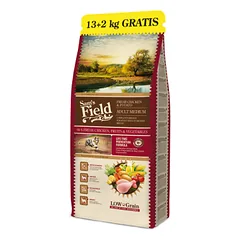
Sam's Field
1,80 €/kg
26,99 € / 15 kg

Country Dog
1,89 €/kg
28,29 € / 15 kg
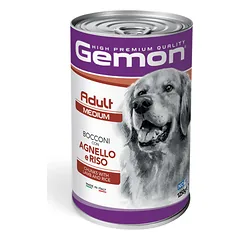
Gemon
1,94 €/kg
2,42 € / 1,3 kg
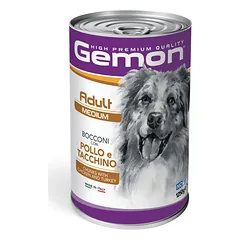
Gemon
1,94 €/kg
2,42 € / 1,3 kg

Sam's Field
2,11 €/kg
27,45 € / 13 kg
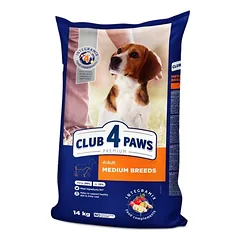
2,14 €/kg
30,00 € / 14 kg
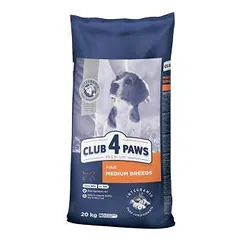
Club 4 Paws
2,15 €/kg
42,99 € / 20 kg