

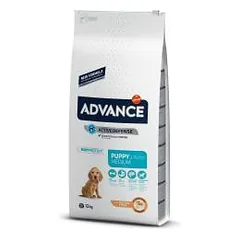
Advance
Advance Puppy Medium sausas maistas vidutinių veislių šuniukams, 12 kg
1,48 €/kg
17,76 € / 12 kg

The Istrian Shorthaired Hound comes from the Istrian peninsula in Croatia, where it has hunted hare and fox across rocky, karst terrain for centuries. The coat, almost pure white and short and dense, was deliberately selected so the hunter could spot the dog against rocks and scrub from a distance. An adult male weighs around 20 kilograms, lean and agile, built to move across sharp, stony ground without injury. The breed is considered older than its wire-haired relative and ranks among Croatia's oldest hounds. It bays while trailing game, with a voice meant to carry across mountainous terrain. Temperament is friendly and independent, but strongly driven by scent and the hunt. It is a poor fit for small apartment living without serious exercise. Life expectancy runs 12 to 14 years.
Browse dog food sized right for this breed
Istrian Shorthaired Hound: how old in human years?
Energy level
Trainability
Family friendly
Grooming need
Males 44–50 cm
Females 44–50 cm
Males 16–20 kg
Females 16–20 kg
Istrian Shorthaired Hound's average temperament and family-life score for this breed is moderate.
Istrian Shorthaired Hound's energy and exercise needs are high.
Istrian Shorthaired Hound's guarding and alertness traits are low.
Istrian Shorthaired Hound's grooming needs are low.
On the stony hills of the Istrian peninsula, among scrub and dry grassland, this white hound chased hare and fox and announced every find at the top of his voice. The same engine runs in your house. He has energy to spare and needs plenty of exercise every single day: long walks, running, scent games. A quick trip to the corner shop is just his warm-up.
The prey drive is very strong, so free running belongs in fenced areas; once he catches a hare's scent, you are no longer on his radio. He learns willingly when training feels like a game and loses interest fast when it turns repetitive. Short sessions and treats work best. Barking is a tool of his trade, so neighbours with thin walls will notice.
With his family he is gentle, patient with children and gets on very well with other dogs. Strangers get a friendly greeting, and guard duty isn't something he takes on. A flat is a squeeze; he is much happier in a house with a garden and a family that spends its weekends outdoors. Once he's had his share of running, he curls up beside you in the evening and becomes the calmest dog in the world.
The Istrian Shorthaired Hound's white, short, dense coat is about as easy to care for as coats come. It's sleek and close-lying, and dried mud simply drops out of it. A weekly once-over with a rubber brush or grooming mitt is all it takes. Shedding is light, though short white hairs on a dark sofa will still give away who has been napping there.
The white coat does have one catch: it shows everything. Sometimes a wipe with a damp cloth is enough, and a bath is only worth it when he has rolled in something he shouldn't have. Check the drop ears once a week, especially after walks through damp grass. After trips to the woods or meadows, look for ticks, which at least are easy to spot against white, and check the paw pads.
We don't have reliable health information specific to this breed, so we don't list conditions here. Keep up regular vet check-ups, and if you are getting a puppy, ask the breeder about the parents' health testing.
This is general information, not veterinary advice. For your own dog's health, tests and treatment, see a vet.
This list is chosen by the breed's weight (20 kg) rather than the breed itself: shops label food by dog size, so every breed of the same size gets the same list. Prices are updated daily.
≈ 260 g of dry food a day, from €14,13 a month For a neutered, normally active 18 kg dog. Calculate for your dog
Advance
1,48 €/kg
17,76 € / 12 kg
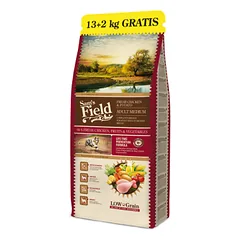
Sam's Field
1,80 €/kg
26,99 € / 15 kg

Country Dog
1,89 €/kg
28,29 € / 15 kg
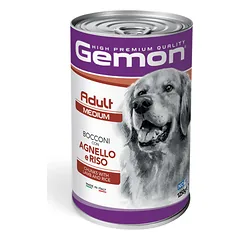
Gemon
1,94 €/kg
2,42 € / 1,3 kg
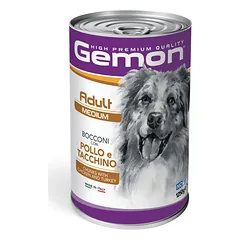
Gemon
1,94 €/kg
2,42 € / 1,3 kg
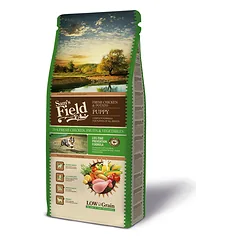
Sam's Field
2,11 €/kg
27,45 € / 13 kg
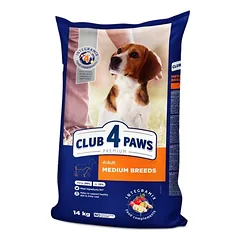
2,14 €/kg
30,00 € / 14 kg
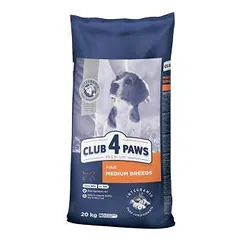
Club 4 Paws
2,15 €/kg
42,99 € / 20 kg