

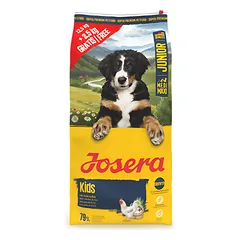
Josera
Josera Kids 12,5kg + 2,5kg = 15 kg
1,38 €/kg
37,89 € / 27,5 kg

The Harrier was used in England to hunt hare for hunters following on foot, smaller than a Foxhound but fast and tireless enough to run quarry down across open fields for hours. The name comes from an old French word for hare, which describes its sole historic purpose precisely. The short, dense coat needs minimal grooming. A male weighs up to 27 kilograms, muscular and high-energy, at its best with a job or at least a long daily run. The breed tends to hunt by scent even in a domestic setting, so a leash outdoors is close to essential. Life expectancy runs 10 to 12 years.
Browse dog food sized right for this breed
Harrier: how old in human years?
Energy level
Trainability
Family friendly
Grooming need
Males 48–55 cm
Females 46–53 cm
Males 20–27 kg
Females 18–25 kg
Harrier's average temperament and family-life score for this breed is moderate.
Harrier's energy and exercise needs are high.
Harrier's guarding and alertness traits are low.
Harrier's grooming needs are low.
The first time your Harrier picks up a fresh hare trail on a walk, you will understand why the neighbours start asking questions. That is not barking but a hound's voice, ringing and sustained, made so hunters could hear it two fields away. The Harrier was bred in England to hunt hare in a pack, and the heritage shows in every stride: he does not tire, forgets the world once he is on a scent and needs a great deal of exercise.
He can be trained, but bring patience and good treats: he is clever enough, he just trusts his nose more than your commands. Letting him off the lead in open country is a gamble, because once he is on a trail he can go far and for a long time. A flat is too small for him, and long hours home alone tend to end in howling and gutted cushions.
On the other hand he gets on brilliantly with other dogs, being a pack hound after all, and is happy to share a home with a second four-legged friend. With his family he is cheerful, patient with children and not especially wary of strangers, so don't expect a guard dog. A typical Harrier day is a long morning hike, sniffing games in the garden, another long evening walk, and a very contented, very tired dog on the rug.
The Harrier's coat is short, dense and practical, like a good pair of work trousers: mud dries and falls off, and there is barely anything to brush. A rubber mitt or bristle brush once a week does it, more during a seasonal coat change, when the short hairs on your clothes and floors multiply noticeably. Bath him only when he has rolled in something he shouldn't have, which, being a hound, he will.
After a walk across fields, check his feet and run a hand through the coat for ticks and burrs. Look inside the drop ears once a week: they are warm, poorly aired and hold on to moisture, so show any smell or redness to your vet.
We don't have reliable health information specific to this breed, so we don't list conditions here. Keep up regular vet check-ups, and if you are getting a puppy, ask the breeder about the parents' health testing.
This is general information, not veterinary advice. For your own dog's health, tests and treatment, see a vet.
This list is chosen by the breed's weight (27 kg) rather than the breed itself: shops label food by dog size, so every breed of the same size gets the same list. Prices are updated daily.
≈ 305 g of dry food a day, from €16,70 a month For a neutered, normally active 22,5 kg dog. Calculate for your dog
Josera
1,38 €/kg
37,89 € / 27,5 kg
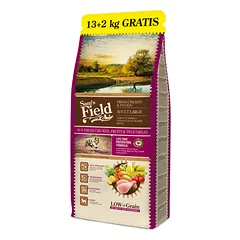
Sam's Field
1,80 €/kg
26,99 € / 15 kg

Country Dog
1,89 €/kg
28,29 € / 15 kg
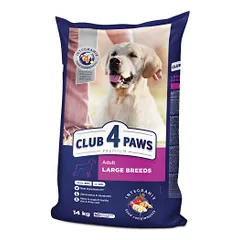
Club 4 Paws
1,92 €/kg
26,94 € / 14 kg
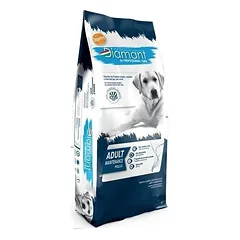
Diamant
1,93 €/kg
28,99 € / 15 kg
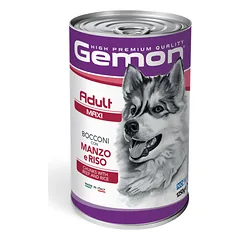
Gemon
1,94 €/kg
2,42 € / 1,3 kg

BIO FORM
2,00 €/kg
40,00 € / 20 kg

BIO FORM
2,00 €/kg
40,00 € / 20 kg