

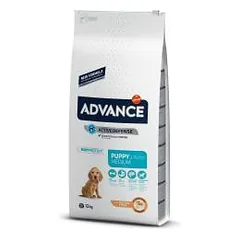
Advance
Advance Puppy Medium sausas maistas vidutinių veislių šuniukams, 12 kg
1,48 €/kg
17,76 € / 12 kg

Originating in Brittany in western France, this tawny coated hound is a short legged variant of the larger Griffon Fauve de Bretagne, bred to hunt hare and rabbit through dense scrub. The harsh, wiry coat protected it from thorny undergrowth, and short legs let it move easily beneath low cover. A male can weigh up to 18 kilograms on a sturdy, muscular frame despite its modest height. The breed nearly disappeared after the Second World War, when many local French hound populations dropped sharply, and was rebuilt from a small number of survivors. Its temperament is considered lively and tenacious, with a strong hunting drive even in dogs kept purely as companions. Life expectancy runs 13 to 15 years.
Browse dog food sized right for this breed
Basset Fauve de Bretagne: how old in human years?
Energy level
Trainability
Family friendly
Grooming need
Males 32–38 cm
Females 32–38 cm
Males 16–18 kg
Females 14–16 kg
Basset Fauve de Bretagne's average temperament and family-life score for this breed is moderate.
Basset Fauve de Bretagne's energy and exercise needs are high.
Basset Fauve de Bretagne's guarding and alertness traits are low.
Basset Fauve de Bretagne's grooming needs are low.
The nose goes down the moment the front door opens, and from then on the world is one enormous scent map. Bred in France to hunt hare, this short-legged hound has far more energy than its height suggests, so plan on long, interesting walks every day, ideally somewhere with things to sniff rather than the same loop round the block. The hunting drive runs deep: let one off the lead in open country and, if a hare trail turns up, your recall will be heard, considered and politely overruled.
Training works, and can be fun, as long as you bring patience and a well-stocked treat pouch. He is bright but independent, as you'd expect of a dog whose job was to make his own decisions in the undergrowth. Short, playful sessions with nose work beat any amount of sternness. Be ready for the voice, too: barking and the occasional full-throated bay are part of the package, especially when he's bored or something interesting has walked past the window.
At home he is cheerful, affectionate and sociable, generally good with children and happy to treat other dogs as potential hunting partners. With strangers he's polite rather than gushing, and he will never make a guard dog; a burglar would more likely get a wagging tail. A small flat with no time for proper outings will feel cramped, but once he's had his fill of scents and miles, he'll curl up beside you in the evening and snore like a dog who has personally searched half of Brittany.
Run a hand along a Basset Fauve de Bretagne's back and you'll feel something closer to a good scrubbing brush than fluff: a harsh, wiry coat made for pushing through Breton hedgerows. Mud doesn't cling to it for long, and once dry most of it simply falls off. Shedding is modest, so a weekly going-over with a firm brush is enough, and a few times a year the dead hair can be plucked out by hand; a groomer will happily show you how. Skip the clippers, which leave the coat soft and lose its weatherproof texture.
After a walk through fields, run your fingers over the legs, belly and between the paw pads, where seeds, burrs and ticks like to hide. Drop ears get less air than upright ones, so lift them once a week and check that the inside is clean and doesn't smell. Trim the nails when you hear them clicking on the floor, and save baths for the days your dog has found something truly unspeakable to roll in.
We don't have reliable health information specific to this breed, so we don't list conditions here. Keep up regular vet check-ups, and if you are getting a puppy, ask the breeder about the parents' health testing.
This is general information, not veterinary advice. For your own dog's health, tests and treatment, see a vet.
This list is chosen by the breed's weight (18 kg) rather than the breed itself: shops label food by dog size, so every breed of the same size gets the same list. Prices are updated daily.
≈ 235 g of dry food a day, from €12,94 a month For a neutered, normally active 16 kg dog. Calculate for your dog
Advance
1,48 €/kg
17,76 € / 12 kg
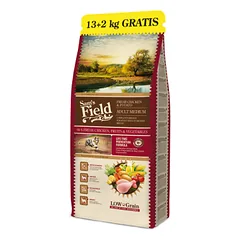
Sam's Field
1,80 €/kg
26,99 € / 15 kg

Country Dog
1,89 €/kg
28,29 € / 15 kg
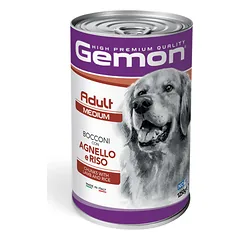
Gemon
1,94 €/kg
2,42 € / 1,3 kg
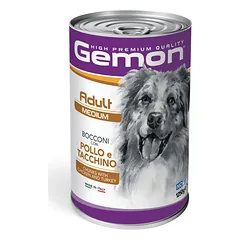
Gemon
1,94 €/kg
2,42 € / 1,3 kg

Sam's Field
2,11 €/kg
27,45 € / 13 kg

2,14 €/kg
30,00 € / 14 kg

Club 4 Paws
2,15 €/kg
42,99 € / 20 kg