

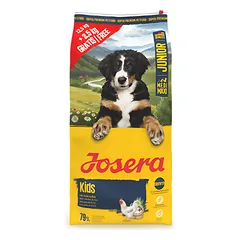
Josera
Josera Kids 12,5kg + 2,5kg = 15 kg
1,38 €/kg
37,89 € / 27,5 kg

The Grand Griffon Vendeen comes from the Vendee region of western France, where it hunted wolf and later boar through dense forest and marshland. It's the largest of the four Vendeen griffon breeds, built to work rough terrain for hours, prioritizing stamina over raw speed. The rough, tousled coat, complete with heavy brows and a beard, protects the face from thick undergrowth. A male weighs up to 30 kilograms, and a loud, far-carrying bark remains a genuinely useful working trait in the field. Temperament runs independent and scent-driven, so the dog can be slow to come back once it's locked onto an interesting trail. Life expectancy runs 12 to 13 years.
Browse dog food sized right for this breed
Grand Griffon Vendeen: how old in human years?
Energy level
Trainability
Family friendly
Grooming need
Males 60–65 cm
Females 58–62 cm
Males 25–30 kg
Females 23–28 kg
Grand Griffon Vendeen's average temperament and family-life score for this breed is moderate.
Grand Griffon Vendeen's energy and exercise needs are high.
Grand Griffon Vendeen's guarding and alertness traits are low.
Grand Griffon Vendeen's grooming needs are low.
Somewhere in the Vendée, hunters once needed a dog who would push through gorse and bramble all day and come out the other side still loudly reporting what he had smelled. The result is this tall, muscular, tireless and very vocal hound. A stroll round the block won't touch the sides. He needs long, proper exercise every day: forest hikes, running beside a bike, scent games. Short-change him and he will find his own projects, and your garden may become an excavation site.
His prey drive is about as strong as it gets, so off-lead time belongs in well-fenced spaces; once he's on a trail, your recall simply doesn't reach him. He learns, but at his own pace and on his own terms. Short, cheerful sessions, treats and plenty of patience beat a firm hand every time. He likes to bark, and a hound's voice carries, so neighbours with thin walls will make his acquaintance quickly.
At home he is affectionate, patient with children and easy with other dogs, which makes sense for a breed made to work in a pack. Strangers get a friendly welcome; he is no guard dog. A flat is a squeeze for him: he does best in a house with a garden and a family that loves the outdoors as much as he does. After a good long hike he will sprawl across the whole rug and sleep so soundly you'd never guess he's the same racket-maker.
The Grand Griffon Vendeen wears a rough, tousled coat that always looks as if he has just come out of a hedge, and that is exactly how it should look. It isn't clipped or polished. Once a week, go through it with a firm brush or a wide-toothed comb to pull out dead hair and catch any mats forming behind the ears and on the chest. Shedding is light, and a few times a year the old coat can be plucked out by hand; if you've never done it, ask a groomer to show you the first time.
The beard and eyebrows collect a souvenir from every meal and every walk: water, crumbs, burrs. Wipe the muzzle with a damp cloth and comb out whatever has woven itself in. The long drop ears stay wet after damp fields, so lift them once a week and have a look inside. After woods or meadows, check for ticks and look over the paw pads for thorns.
We don't have reliable health information specific to this breed, so we don't list conditions here. Keep up regular vet check-ups, and if you are getting a puppy, ask the breeder about the parents' health testing.
This is general information, not veterinary advice. For your own dog's health, tests and treatment, see a vet.
This list is chosen by the breed's weight (30 kg) rather than the breed itself: shops label food by dog size, so every breed of the same size gets the same list. Prices are updated daily.
≈ 345 g of dry food a day, from €18,88 a month For a neutered, normally active 26,5 kg dog. Calculate for your dog
Josera
1,38 €/kg
37,89 € / 27,5 kg
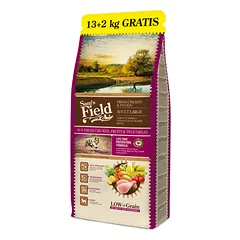
Sam's Field
1,80 €/kg
26,99 € / 15 kg

Country Dog
1,89 €/kg
28,29 € / 15 kg
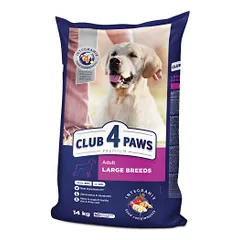
Club 4 Paws
1,92 €/kg
26,94 € / 14 kg
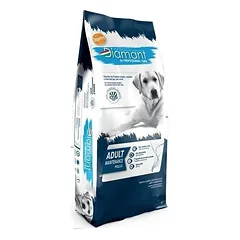
Diamant
1,93 €/kg
28,99 € / 15 kg
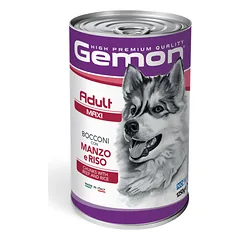
Gemon
1,94 €/kg
2,42 € / 1,3 kg

BIO FORM
2,00 €/kg
40,00 € / 20 kg

BIO FORM
2,00 €/kg
40,00 € / 20 kg