

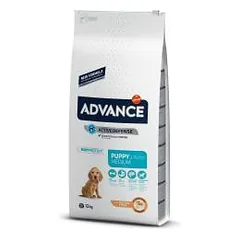
Advance
Advance Puppy Medium sausas maistas vidutinių veislių šuniukams, 12 kg
1,48 €/kg
17,76 € / 12 kg

Also known as: Swedish Beagle, Swedish Dachsbracke
The Drever was developed in Sweden in the early twentieth century by crossing local hounds with the German Dachsbracke, aiming for a short-legged dog that could trail game slowly but relentlessly until the hunter caught up. Those short, sturdy legs let it push through dense undergrowth where a taller hound would tire faster. An adult male weighs around 16 kilograms, making it one of the more compact Swedish hounds. The short, dense coat needs little more than regular brushing during shedding season. In Sweden it remains one of the most popular hunting breeds, though it is rarely seen elsewhere. It tends to bay loudly on a trail, which can make apartment life a challenge. Nose and stamina matter more than speed here, and its exercise needs follow accordingly. Life expectancy runs 12 to 14 years.
Browse dog food sized right for this breed
Drever: how old in human years?
Energy level
Trainability
Family friendly
Grooming need
Males 32–38 cm
Females 30–36 cm
Males 14–16 kg
Females 12–15 kg
Drever's average temperament and family-life score for this breed is moderate.
Drever's energy and exercise needs are moderate.
Drever's guarding and alertness traits are low.
Drever's grooming needs are low.
At first glance a Drever looks like a dog someone forgot to finish lengthening at the legs, but this Swede knows exactly what he's about. He was bred to follow a scent and drive game at a steady, stubborn pace towards the hunter, so stamina he has in plenty and speed he never needed. A good walk or two a day suits him, preferably somewhere with smells worth investigating rather than a brisk march along the pavement. The hunting drive is strong, so keep off-lead running for fenced spaces: once he's on a trail, he forgets he has an owner.
He'll learn, provided he sees the point. He is clever but independent, so short sessions, treats and patience work best, and nose games are the highlight of his week. He barks about as much as you'd expect from a hound: not endlessly, but you will hear about the neighbour walking past and the odd noise in the stairwell.
Indoors he is calm, affectionate and easy-going, usually good with children and perfectly happy to share the house with another dog. Strangers get a thorough sniff before he decides whether they're worth befriending; nobody would call him a guard dog. With his exercise taken care of, a Drever can live in a flat, but spare him leaping off stairs and furniture and keep him trim: for a long back, an easier life is a better one.
The Drever wears a short, dense, close-lying coat built for Swedish forests, dewy grass and wet snow, and it asks for remarkably little in return. Once a week, go over it with a rubber brush or grooming mitt to lift the dead hair and bring back the shine. Shedding is moderate: you'll find hair on the sofa, just not drifts of it. A bath is only needed when your dog comes home wearing most of the forest.
The parts that deserve your attention are the ones a brush doesn't reach. Those long drop ears stay damp after a walk through wet grass, so lift them once a week and check that the inside is clean and doesn't smell. After woodland outings, run your hands over the body for ticks. Short legs and a long body mean the nails don't always wear down on their own, so trim them when you hear them clicking on the floor.
We don't have reliable health information specific to this breed, so we don't list conditions here. Keep up regular vet check-ups, and if you are getting a puppy, ask the breeder about the parents' health testing.
This is general information, not veterinary advice. For your own dog's health, tests and treatment, see a vet.
This list is chosen by the breed's weight (16 kg) rather than the breed itself: shops label food by dog size, so every breed of the same size gets the same list. Prices are updated daily.
≈ 215 g of dry food a day, from €11,90 a month For a neutered, normally active 14,3 kg dog. Calculate for your dog
Advance
1,48 €/kg
17,76 € / 12 kg
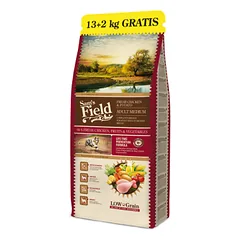
Sam's Field
1,80 €/kg
26,99 € / 15 kg

Country Dog
1,89 €/kg
28,29 € / 15 kg
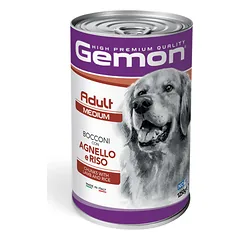
Gemon
1,94 €/kg
2,42 € / 1,3 kg
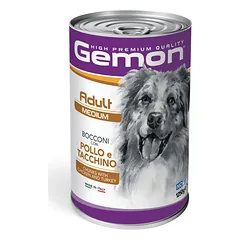
Gemon
1,94 €/kg
2,42 € / 1,3 kg
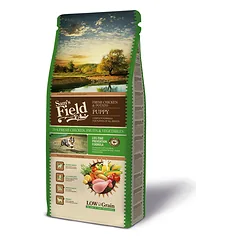
Sam's Field
2,11 €/kg
27,45 € / 13 kg
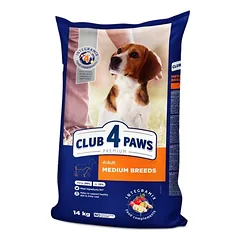
2,14 €/kg
30,00 € / 14 kg
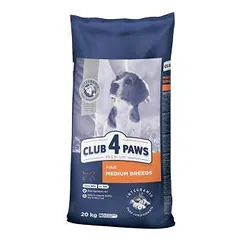
Club 4 Paws
2,15 €/kg
42,99 € / 20 kg