

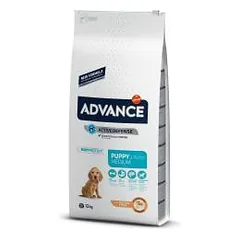
Advance
Advance Puppy Medium sausas maistas vidutinių veislių šuniukams, 12 kg
1,48 €/kg
17,76 € / 12 kg

Also known as: GBGV, Griffon Vendeen
Originating in the Vendée region of western France, this short legged hound was bred to hunt hare through dense, thorny scrub near the coast. The rough, tousled coat protected it from sharp branches, and its short legs let it move easily under low cover. A male can weigh up to 20 kilograms on a long but solid frame. Despite the basset in its name, it's actually the largest of the four Vendée griffon basset breeds. Its voice is considered particularly clear and frequent, once valued by hunters as a reliable way to track the dog's position through woodland. At home it tends to be friendly and lively, but it needs regular hand stripping to avoid skin problems developing underneath the coat. Life expectancy runs 13 to 15 years.
Browse dog food sized right for this breed
Grand Basset Griffon Vendeen: how old in human years?
Energy level
Trainability
Family friendly
Grooming need
Males 39–44 cm
Females 39–44 cm
Males 18–20 kg
Females 16–18 kg
Grand Basset Griffon Vendeen's average temperament and family-life score for this breed is moderate.
Grand Basset Griffon Vendeen's energy and exercise needs are high.
Grand Basset Griffon Vendeen's guarding and alertness traits are low.
Grand Basset Griffon Vendeen's grooming needs are low.
Nose to the ground, tail up like a flag, and a voice that tells not just you but the whole street that it has found a hare's trail. The Grand Basset Griffon Vendeen is a French scenthound from the Vendée, bred to follow hare in a pack, keenly and noisily, and it never forgets that, even in a city flat with no hare in sight.
Short legs notwithstanding, it has energy to spare: every day it needs long, interesting walks with plenty of sniffing, and time to run in a securely fenced space. Prey drive and hunting instinct are very strong, so once on a scent it can simply vanish over the horizon, and recall does not come easily; a lead in open country is the sensible choice. It learns quickly when it wants to, so treats, patience and a sense of humour work better than strictness.
At home it is cheerful, affectionate and sociable: good with children and, as a pack hound, with other dogs. It is polite to strangers but won't guard anything. It likes to bark and howl, especially when left alone, so thin walls and long hours by itself are a poor match; it is happiest with an active family, a garden and neighbours with some patience.
The Grand Basset Griffon Vendeen wears a rough, tousled coat that is meant to look a bit unbrushed, so don't chase a show-ring gloss. It sheds little. Once a week, go over it with a stiff brush and a comb, especially on the chest, behind the ears and on the legs, where it likes to tangle. A few times a year the dead hair can be plucked out by hand or left to a groomer; clipping takes the harshness out of a coat like this.
A body carried low to the ground and long hanging ears collect everything on the way: dew, mud, seeds. After a walk check the belly, between the toes and the ear edges, and once a week lift the ears and look inside; redness, discharge or a bad smell is a reason to see a vet. The beard is worth a wipe after meals, and the nails need trimming if they don't wear down on their own.
We don't have reliable health information specific to this breed, so we don't list conditions here. Keep up regular vet check-ups, and if you are getting a puppy, ask the breeder about the parents' health testing.
This is general information, not veterinary advice. For your own dog's health, tests and treatment, see a vet.
This list is chosen by the breed's weight (20 kg) rather than the breed itself: shops label food by dog size, so every breed of the same size gets the same list. Prices are updated daily.
≈ 260 g of dry food a day, from €14,13 a month For a neutered, normally active 18 kg dog. Calculate for your dog
Advance
1,48 €/kg
17,76 € / 12 kg
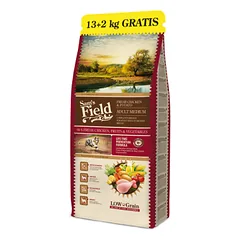
Sam's Field
1,80 €/kg
26,99 € / 15 kg

Country Dog
1,89 €/kg
28,29 € / 15 kg
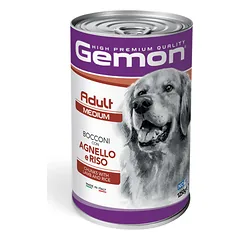
Gemon
1,94 €/kg
2,42 € / 1,3 kg
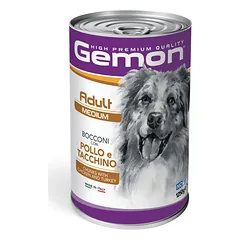
Gemon
1,94 €/kg
2,42 € / 1,3 kg
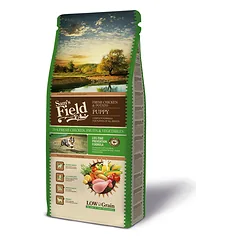
Sam's Field
2,11 €/kg
27,45 € / 13 kg

2,14 €/kg
30,00 € / 14 kg

Club 4 Paws
2,15 €/kg
42,99 € / 20 kg