

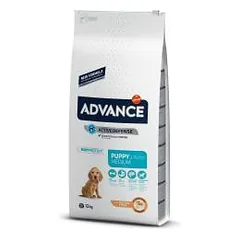
Advance
Advance Puppy Medium sausas maistas vidutinių veislių šuniukams, 12 kg
1,48 €/kg
17,76 € / 12 kg

The Grossspitz is one of five size varieties the FCI recognizes under the German Spitz breed, and the type itself is considered one of the oldest in Central Europe, descended from the old Torfspitz. The thick double coat, with its long, harsh outer layer, gives it that distinctive lion-mane silhouette around the neck. Males can weigh up to 20 kilograms, with a square, compact frame. The coat needs regular brushing, especially during shedding seasons when most of the undercoat blows out. Historically kept as a watchdog, it still tends toward vocal alertness today. It bonds closely with its family but stays reserved around strangers. Life expectancy runs 13 to 15 years.
Browse dog food sized right for this breed
German Spitz (Grossspitz): how old in human years?
Energy level
Trainability
Family friendly
Grooming need
Males 42–47 cm
Females 42–47 cm
Males 15–20 kg
Females 13–18 kg
German Spitz (Grossspitz)'s average temperament and family-life score for this breed is high.
German Spitz (Grossspitz)'s energy and exercise needs are moderate.
German Spitz (Grossspitz)'s guarding and alertness traits are moderate.
German Spitz (Grossspitz)'s grooming needs are moderate.
The postman has barely shut the gate and you already know: your Grossspitz announced it before the doorbell did. For centuries these dogs guarded farms and homesteads, and they take the watchman's job seriously: alert, loud, but not aggressive. Its voice is its working tool, so from puppyhood it pays to teach when one bark is enough.
It wants a few good walks a day and some play, but no endurance sport: this is a dog that likes activity, not perpetual motion. It has very little hunting drive, so it would rather stay close to you than chase birds. It is clever and learns quickly and willingly, especially when lessons are consistent and kind, and it lives well in a flat, provided your neighbours have a soft spot for a vigilant dog.
In the family a Grossspitz is devoted and gentle and gets on wonderfully with children; it loves its people without reservation and does not like being left alone for long. It lives peaceably with other dogs, and sizes strangers up from a distance before it lets them stroke it. In the evening, after a round of the house to check everyone is where they should be, it settles by the front door, where it can hear everything best.
The Grossspitz wears a double coat: long, harsh outer hair that stands off the body, over a dense, cotton-soft undercoat that wraps the neck and chest in a proper mane. It keeps out cold and dirt beautifully, but it sheds heavily, above all when the undercoat changes, when tufts of hair turn up even in rooms the dog has never entered. Brush the coat in layers right down to the skin several times a week, and daily during a moult, paying special attention behind the ears, on the trousers and under the tail, where the undercoat tangles first. Don't clip this coat short: it is what shields the dog from the weather, and shaved hair may grow back unevenly. As you brush, check the skin, because under that density you only see redness or flakes once you part the hair.
Check the eyes once a week and wipe the corners with a damp cloth. The small, pricked, triangular ears get plenty of air, but they are still worth a look inside now and then: clean and odour-free is what you want. After a walk through wet snow, comb the snowballs out of the leg feathering before they felt into the undercoat.
Under all that coat is a sturdy, medium-sized dog you can expect to share thirteen to fifteen years with. With the German Spitz (Grossspitz), three areas deserve attention: the windpipe, the knees and the eyes. A thick coat can hide changes, so regular vet visits act as a second pair of eyes as well.
This is general information, not veterinary advice. For your own dog's health, tests and treatment, see a vet.
The trachea is the windpipe, and its rings of cartilage can soften so that the tube flattens and air has a harder time getting through. You may hear a dry, honking cough, especially when the dog gets excited, say when greeting you at the door. That cough is a reason to talk to your vet, and if your dog is struggling to breathe or its gums turn blue, it needs a vet immediately.
The kneecap, a small bone at the front of the knee, can slip out of its groove and pop back a moment later. You might see your Spitz suddenly carry a hind leg for a few steps and then walk on normally; under a thick coat on the legs this is easy to miss. If the skip keeps returning, have your vet take a look.
PRA is an inherited disease in which the retina, the light-catching layer at the back of the eye, slowly wastes away and sight fades. The first thing you may notice is a Spitz reluctant to go into a dark room, bumping into things at dusk, or pupils that look unusually wide and shiny. Because the change is slow, the dog adapts for a long time, so ask the breeder about the parents' health testing and talk any change in sight through with your vet.
This list is chosen by the breed's weight (20 kg) rather than the breed itself: shops label food by dog size, so every breed of the same size gets the same list. Prices are updated daily.
≈ 240 g of dry food a day, from €13,24 a month For a neutered, normally active 16,5 kg dog. Calculate for your dog
Advance
1,48 €/kg
17,76 € / 12 kg
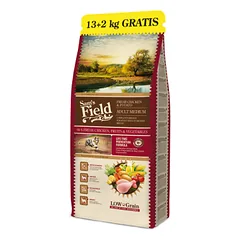
Sam's Field
1,80 €/kg
26,99 € / 15 kg

Country Dog
1,89 €/kg
28,29 € / 15 kg
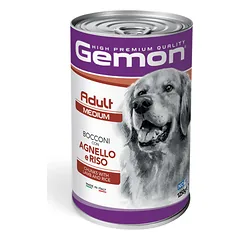
Gemon
1,94 €/kg
2,42 € / 1,3 kg
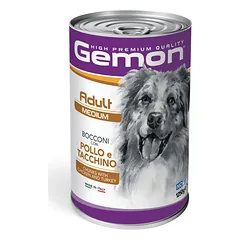
Gemon
1,94 €/kg
2,42 € / 1,3 kg
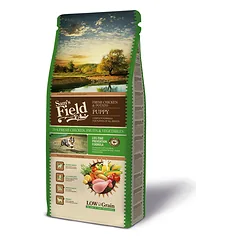
Sam's Field
2,11 €/kg
27,45 € / 13 kg
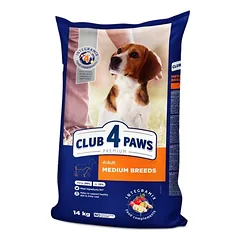
2,14 €/kg
30,00 € / 14 kg
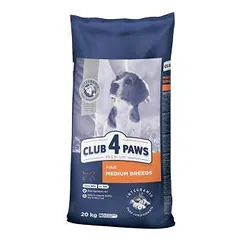
Club 4 Paws
2,15 €/kg
42,99 € / 20 kg