

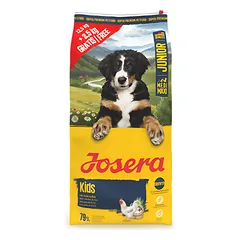
Josera
Josera Kids 12,5kg + 2,5kg = 15 kg
1,38 €/kg
37,89 € / 27,5 kg

The French Tricolour Hound belongs to the large French pack hound tradition, bred to hunt big game in groups, announcing the trail to the huntsman with a loud, far-carrying voice. Weighing up to 32 kilograms, it has the stamina to run for hours, and the short coat lets it move through dense undergrowth without snagging. This breed is almost always kept as part of a pack rather than as a lone companion, since it was built to work alongside other hounds. A single dog living alone in a house often misses that pack company. The voice it uses to signal a scent trail is loud and carries a long way, which makes it a poor fit for a suburban neighborhood. Life expectancy runs 11 to 13 years.
Browse dog food sized right for this breed
French Tricolour Hound: how old in human years?
Energy level
Trainability
Family friendly
Grooming need
Males 62–72 cm
Females 60–70 cm
Males 27–32 kg
Females 27–32 kg
French Tricolour Hound's average temperament and family-life score for this breed is moderate.
French Tricolour Hound's energy and exercise needs are high.
French Tricolour Hound's guarding and alertness traits are low.
French Tricolour Hound's grooming needs are low.
An early morning, mist over the field, and suddenly a deep, ringing voice rolls through the forest: that is a French Tricolour Hound on a scent. It was bred to hunt in a pack, following the trail of large game for hours and announcing it loudly the whole way. That stamina doesn't disappear when it lives with a family: it needs a lot of exercise, and long stretches of it, and a quick loop around the block is barely a warm-up.
It learns at its own pace. It has a good head, but the nose always gets the first vote, so train the recall patiently with treats and praise, and let it run free only in a fenced area: once it catches a scent, it may simply stop hearing you. Its prey drive is very strong, so cats and small pets look more like quarry than friends. A flat is too small for it, and that big voice won't win over the neighbours either.
On the other hand, it gets on wonderfully with other dogs, having grown up in a pack, and a second dog at home can be the best present you could give it. With its own people it is calm and friendly, and it lives well with children, though a young, large hound can bowl over a toddler without meaning to. It is reserved with strangers but won't make a guard. A hunter suits it best, or an active family in the countryside with a large, well-fenced garden and long walks every day.
The French Tricolour Hound's coat is short, dense and close-lying, so you can leave the grooming arsenal in the shop. Once a week, run a rubber mitt or a bristle brush over it and the loose hair and dust end up on the mitt rather than the sofa. It sheds little, and dried mud simply falls off a coat this short, so a bath is only needed after the dog has found something truly fragrant to roll in.
The places the coat doesn't protect deserve more attention. Lift the long, hanging ears every week and look inside: redness, discharge or a bad smell is a reason to see a vet. After a ramble through the woods, check the paws, pads and skin for ticks, thorns and scratches, and trim the nails if they don't wear down on their own. The lips hang a little, so a quick wipe of the muzzle after a drink is sometimes welcome.
We don't have reliable health information specific to this breed, so we don't list conditions here. Keep up regular vet check-ups, and if you are getting a puppy, ask the breeder about the parents' health testing.
This is general information, not veterinary advice. For your own dog's health, tests and treatment, see a vet.
This list is chosen by the breed's weight (32 kg) rather than the breed itself: shops label food by dog size, so every breed of the same size gets the same list. Prices are updated daily.
≈ 375 g of dry food a day, from €20,47 a month For a neutered, normally active 29,5 kg dog. Calculate for your dog
Josera
1,38 €/kg
37,89 € / 27,5 kg
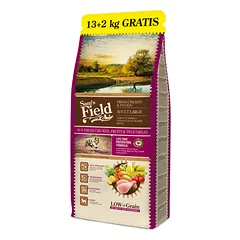
Sam's Field
1,80 €/kg
26,99 € / 15 kg

Country Dog
1,89 €/kg
28,29 € / 15 kg
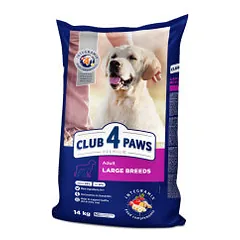
Club 4 Paws
1,92 €/kg
26,94 € / 14 kg
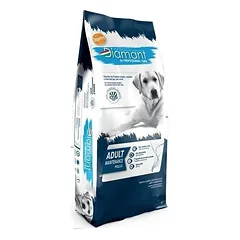
Diamant
1,93 €/kg
28,99 € / 15 kg
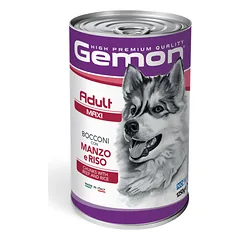
Gemon
1,94 €/kg
2,42 € / 1,3 kg
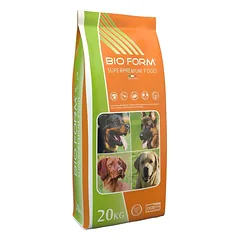
BIO FORM
2,00 €/kg
40,00 € / 20 kg
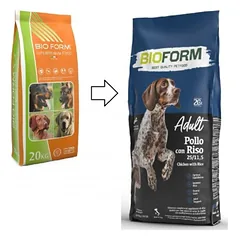
BIO FORM
2,00 €/kg
40,00 € / 20 kg