

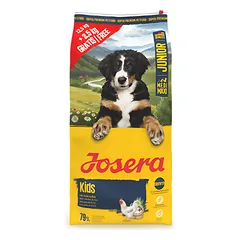
Josera
Josera Kids 12,5kg + 2,5kg = 15 kg
1,38 €/kg
37,89 € / 27,5 kg

Also known as: Hungarian hound
The Transylvanian Hound is a Hungarian-origin hunting breed, historically used in the Carpathian region to track large game, bear and boar included, through mountainous forest terrain. The breed nearly disappeared during the Second World War and was only rebuilt afterward through the efforts of dedicated breeders. The short, dense coat handles thick undergrowth well, and a frame up to 30 kilograms gives it the strength to work against large game. It remains rare outside Eastern Europe today and stays mainly a working dog rather than a companion breed. At home it does best with an experienced owner familiar with hunting work. Life expectancy runs 10 to 12 years.
Browse dog food sized right for this breed
Transylvanian Hound: how old in human years?
Energy level
Trainability
Family friendly
Grooming need
Males 50–65 cm
Females 45–60 cm
Males 20–30 kg
Females 18–28 kg
Transylvanian Hound's average temperament and family-life score for this breed is moderate.
Transylvanian Hound's energy and exercise needs are high.
Transylvanian Hound's guarding and alertness traits are moderate.
Transylvanian Hound's grooming needs are low.
In the Carpathian forests this dog would follow game for hours over hills and through thickets, and that stamina hasn't gone anywhere, even if your route now ends at a park bench. The Transylvanian Hound is a Hungarian scenthound, full of energy, with very strong prey drive and hunting instinct, and a voice you will hear the moment it smells something interesting. A lead in unfamiliar places isn't a formality here, it's a necessity.
It needs a great deal of exercise every day: long hikes, running, tracking or scent work that occupies both its head and its nose. It is clever but independent, so train it patiently and consistently, with good motivation; dull repetition bores it fast. A flat and short walks round the block won't do, and boredom quickly turns into barking or digging.
At home, once it has had its share of work, it is calm and loyal, gets on with other dogs and with children who understand a dog isn't a toy. It is reserved with strangers and will announce visitors, but it is no guard dog. It suits a hunter or a hiker living near the woods best, with a fenced garden and time for a daily adventure.
Grooming a Transylvanian Hound takes less time than cleaning your boots after the same walk. The short, dense coat shrugs off sleet and branches, and dirt comes away with a damp towel. Once a week, go over it with a rubber mitt or a bristle brush to lift out dead hair; it sheds little, a bit more at the turn of the seasons. Baths can be rare, only when they are really needed.
After a day in the woods, the check-up matters most: run your hands over the whole body for ticks, scratches and burrs, and look at the paw pads. Lift the hanging ears every week and look inside; redness, discharge or a bad smell is a reason to see a vet. Trim the nails if the daily miles don't wear them down.
We don't have reliable health information specific to this breed, so we don't list conditions here. Keep up regular vet check-ups, and if you are getting a puppy, ask the breeder about the parents' health testing.
This is general information, not veterinary advice. For your own dog's health, tests and treatment, see a vet.
This list is chosen by the breed's weight (30 kg) rather than the breed itself: shops label food by dog size, so every breed of the same size gets the same list. Prices are updated daily.
≈ 320 g of dry food a day, from €17,53 a month For a neutered, normally active 24 kg dog. Calculate for your dog
Josera
1,38 €/kg
37,89 € / 27,5 kg
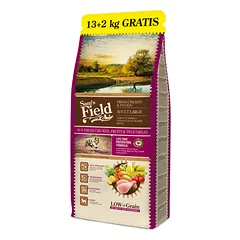
Sam's Field
1,80 €/kg
26,99 € / 15 kg

Country Dog
1,89 €/kg
28,29 € / 15 kg
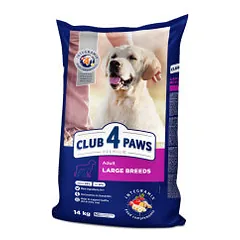
Club 4 Paws
1,92 €/kg
26,94 € / 14 kg
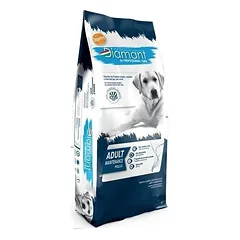
Diamant
1,93 €/kg
28,99 € / 15 kg
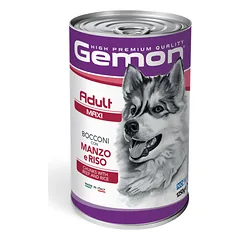
Gemon
1,94 €/kg
2,42 € / 1,3 kg

BIO FORM
2,00 €/kg
40,00 € / 20 kg

BIO FORM
2,00 €/kg
40,00 € / 20 kg