

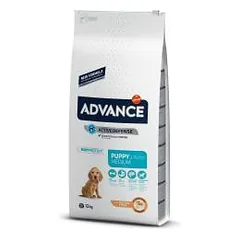
Advance
Advance Puppy Medium sausas maistas vidutinių veislių šuniukams, 12 kg
1,48 €/kg
17,76 € / 12 kg

Also known as: Finnish Lapponian Dog
The Finnish Lapphund descends from the reindeer-herding dogs of the Sami people in northern Finland, where cold and snow were simply everyday conditions. The double coat, with its long, dense outer layer and thick undercoat, let this spitz breed work outdoors through hard winters, though it needs regular brushing during seasonal shedding. A male weighs around 24 kilograms, with a compact frame, and its loud bark was used to bunch and move reindeer rather than nip at their heels. The breed is known for a friendly, highly trainable temperament, and today it turns up far more often as a family dog than as a working herder. It handles cold weather more naturally than heat, so summer owners should watch for signs of overheating. Life expectancy runs 12 to 15 years.
Browse dog food sized right for this breed
Finnish Lapphund: how old in human years?
Energy level
Trainability
Family friendly
Grooming need
Males 46–52 cm
Females 41–47 cm
Males 16–24 kg
Females 14–21 kg
Finnish Lapphund's average temperament and family-life score for this breed is high.
Finnish Lapphund's energy and exercise needs are moderate.
Finnish Lapphund's guarding and alertness traits are moderate.
Finnish Lapphund's grooming needs are moderate.
In the morning, before you've even opened your eyes, a Finnish Lapphund is already sitting by the bed, gazing at you with that soft, almost teddy-bear look. It is gentle, devoted to its family and gets on well with children, other dogs and visitors alike, a rare combination in the dog world. It has plenty of energy, but in moderate measure: a long daily walk, a game in the garden and a few puzzles keep it entirely content.
It enjoys learning and catches on quickly, especially when the work feels like play. Do remember its herding past, though: it likes to bark, announces every passer-by, and now and then tries to round up running children. As a guard it is hopeless, likely to greet a burglar with a wagging tail, but it will certainly tell you loudly that someone has arrived.
A flat suits it if the neighbours can put up with the barking and you with the hair. It loves the cold: when the frost bites and the snow falls, the Lapphund becomes the happiest dog in the yard, rolling in the drifts long after you've lost the feeling in your fingers.
A Finnish Lapphund wears a double coat: long, harsh outer hair over a thick, soft undercoat that kept out the Arctic cold. Brush it right down to the skin once or twice a week, paying attention to the spots behind the ears, on the chest and on the "trousers" of the hind legs where mats form. A few times a year the undercoat comes out, and then there will be fur everywhere, on the sofa, the rug and your black trousers; in those weeks, brush every day.
That dense coat hides the skin, so while brushing look for redness, scabs or ticks. Check the upright ears once a week: inside they should be clean and free of smell. Wipe the corners of the eyes with a damp cloth, and take a red or weepy eye to the vet. The coat doesn't need clipping, as it regulates heat by itself; in summer, shade will help your dog more than clippers.
A dog whose ancestors herded reindeer across Lapland is no hothouse flower: the Finnish Lapphund is a sturdy, medium-sized dog that can be with you for twelve to fifteen years. A few joint and eye conditions are linked to the breed, so it is worth watching how your dog moves and how it finds its way at dusk. When in doubt, talk to a vet, and if you are getting a puppy, ask the breeder about the parents' health testing.
This is general information, not veterinary advice. For your own dog's health, tests and treatment, see a vet.
The hip joint forms badly: the ball of the thigh bone doesn't sit snugly in its socket, so the joint wears faster than it should. You might notice your dog hesitating before jumping into the car, getting up stiffly after a nap, or running with both hind legs together like a rabbit. A Lapphund likes to keep moving for hours, so changes like these deserve a vet's eye rather than being put down to tiredness.
This is a developmental problem in the elbow of the front leg, where the bones don't fit together quite as they should and the joint becomes painful. The dog may limp on one front leg, especially after a long walk or first thing in the morning before it has warmed up. The first signs show up in a young, growing dog, so take a young Lapphund that starts limping to a vet.
This is an inherited disease in which the retina slowly wastes away and the dog gradually loses its sight, first in dim light. You might notice your Lapphund hanging back from the dark garden in the evening, bumping into things, or sticking closer to you. It isn't painful and dogs adapt remarkably well, but any change you notice is worth showing to a vet.
This list is chosen by the breed's weight (24 kg) rather than the breed itself: shops label food by dog size, so every breed of the same size gets the same list. Prices are updated daily.
≈ 265 g of dry food a day, from €14,60 a month For a neutered, normally active 18,8 kg dog. Calculate for your dog
Advance
1,48 €/kg
17,76 € / 12 kg
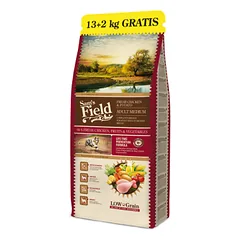
Sam's Field
1,80 €/kg
26,99 € / 15 kg

Country Dog
1,89 €/kg
28,29 € / 15 kg
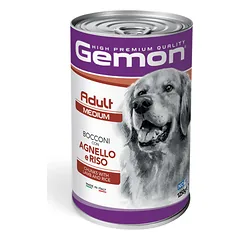
Gemon
1,94 €/kg
2,42 € / 1,3 kg
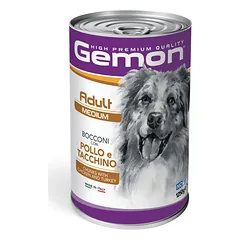
Gemon
1,94 €/kg
2,42 € / 1,3 kg
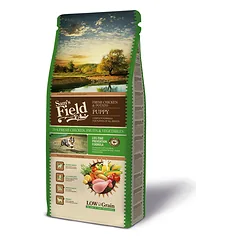
Sam's Field
2,11 €/kg
27,45 € / 13 kg
2,14 €/kg
30,00 € / 14 kg
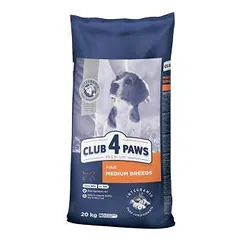
Club 4 Paws
2,15 €/kg
42,99 € / 20 kg