


Josera
Josera Kids 12,5kg + 2,5kg = 15 kg
1,38 €/kg
37,89 € / 27,5 kg

Also known as: International Foxhound Association
The English Foxhound was bred for centuries not as an individual family dog but as a pack animal, hunting fox alongside mounted riders in a tradition that stretches back to the sixteenth century. That history is why the breed still does best in a large group rather than alone at home. The short, dense coat needs minimal grooming, but the breed is a poor fit for apartment life given its very high exercise needs. An adult male can reach 34 kilograms, built for stamina, able to run for hours alongside horses across open country. Its voice is loud and far-carrying, meant to be heard by a mounted rider during a hunt. Temperament is friendly but independent, hard to manage without firm training, since the breed is conditioned to follow its own instincts rather than human commands. Genuine Foxhound pets remain rare today; most still work with hunting packs. Life expectancy runs 10 to 13 years.
Browse dog food sized right for this breed
English Foxhound: how old in human years?
Energy level
Trainability
Family friendly
Grooming need
Males 58–64 cm
Females 55–62 cm
Males 29–34 kg
Females 25–32 kg
English Foxhound's average temperament and family-life score for this breed is high.
English Foxhound's energy and exercise needs are high.
English Foxhound's guarding and alertness traits are low.
English Foxhound's grooming needs are low.
Picture forty hounds sailing over a hedge at once, their voices merging into a single chorus: that is what the English Foxhound was made for. For a long time they lived in packs in hunt kennels rather than in family living rooms, and it still shows. He has energy and stamina to spare, so he needs hours of movement every day: long hikes, runs, free running in a securely fenced area. A flat with no garden is simply not his place.
He is clever, but his brains work for his nose rather than for your commands. Training goes more slowly than with the eager-to-please breeds, so bring patience, consistency and treats, and don't rely on his recall in open country: once he has a scent, he will hear you when he decides to. His voice is loud and carries far, so your neighbours should be tolerant, and cats and small pets may become objects of keen interest.
He is at his best among other dogs: few breeds love a crowd so much, and a second dog at home is the finest present you could give him. With his family he is gentle and friendly, patient with children, and he regards strangers calmly, with neither aggression nor much excitement, so don't expect a guard. If you have plenty of time outdoors, patience and space, you get a loyal, cheerful and remarkably tireless companion.
An English Foxhound's coat is short, dense and slightly harsh, a proper working dog's jacket that shrugs off rain and mud. Looking after it is simple: once a week, go over him with a rubber brush or grooming mitt, and the dead hair ends up on the brush instead of your rug. He sheds moderately, so there will always be a little hair about. Mud that dries in a short coat mostly just falls off, so baths are only needed when he comes home smelling so ripe that even he looks pleased with himself.
After every long outing, give his skin a quick check: run your palm along his sides, belly and legs, feeling for scratches, ticks or sore spots. His ears hang down, so once a week lift them and check that the inside is clean, with no discharge or bad smell. Wipe the corners of his eyes with a damp cloth if dirt has gathered there, and don't forget the nails, which wear down less on soft ground than you might think.
For centuries English Foxhounds were bred to run in a pack from dawn to dusk, and that produced a sturdy, soundly built hound without exaggerations. Two things are worth knowing about: the stomach, because he is a big, deep-chested dog, and the hips. Neither is a reason to worry, just a reason to learn the signs.
This is general information, not veterinary advice. For your own dog's health, tests and treatment, see a vet.
The stomach fills with gas and can twist on itself, cutting off its own blood supply, and that is life-threatening. The dog turns restless, paces from corner to corner, tries to vomit with nothing coming up, drools, and his belly swells and feels tight. A large, deep-chested hound like the English Foxhound has exactly the build this threatens, so if you see these signs, get him to a vet immediately.
The hip joint forms unevenly, so its surfaces don't fit together the way they should. You might notice your foxhound taking the stairs reluctantly after a long day out, getting up stiffly in the morning, or bunny-hopping with both hind legs together when he runs. For a dog built to run all day, sound hips are the foundation, so ask the breeder about the parents' health testing.
This list is chosen by the breed's weight (34 kg) rather than the breed itself: shops label food by dog size, so every breed of the same size gets the same list. Prices are updated daily.
≈ 380 g of dry food a day, from €20,73 a month For a neutered, normally active 30 kg dog. Calculate for your dog
Josera
1,38 €/kg
37,89 € / 27,5 kg
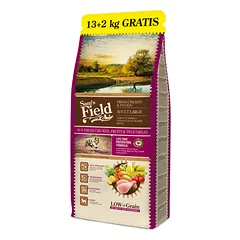
Sam's Field
1,80 €/kg
26,99 € / 15 kg

Country Dog
1,89 €/kg
28,29 € / 15 kg

Club 4 Paws
1,92 €/kg
26,94 € / 14 kg

Diamant
1,93 €/kg
28,99 € / 15 kg
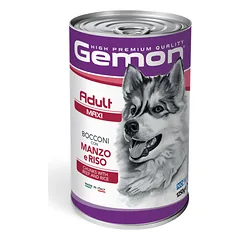
Gemon
1,94 €/kg
2,42 € / 1,3 kg

BIO FORM
2,00 €/kg
40,00 € / 20 kg

BIO FORM
2,00 €/kg
40,00 € / 20 kg