

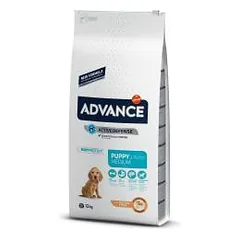
Advance
Advance Puppy Medium sausas maistas vidutinių veislių šuniukams, 12 kg
1,48 €/kg
17,76 € / 12 kg

The Croatian Sheepdog has worked the lowlands of Croatia for centuries, guarding and helping drive flocks of sheep, with written references to the breed dating back to the 14th century. It follows one strict rule: the standard allows only black coats, making it one of the few FCI breeds defined by a single fixed color. The short, wavy double coat sheds rain and wind well across the Balkan plains. A male weighs up to 20 kilograms, quick and agile, built to circle a flock all day. Temperament runs alert, intelligent and deeply attached to its owner, though wary of strangers. Life expectancy runs 12 to 14 years.
Browse dog food sized right for this breed
Croatian Sheepdog: how old in human years?
Energy level
Trainability
Family friendly
Grooming need
Males 45–50 cm
Females 43–48 cm
Males 13–20 kg
Females 13–20 kg
Croatian Sheepdog's average temperament and family-life score for this breed is moderate.
Croatian Sheepdog's energy and exercise needs are moderate.
Croatian Sheepdog's guarding and alertness traits are high.
Croatian Sheepdog's grooming needs are low.
The garden gate barely creaks and a black dog is already standing at it, informing the whole street. The Croatian Sheepdog comes from the plains of Slavonia, where for centuries it herded sheep and cattle, and its job was always twofold: keep the flock moving and announce every new arrival. Barking is not a bad habit here but a profession, so the neighbours will know about your visitors before you do.
It is quick, agile and very bright, and a purpose to the day matters to it as much as the walk itself. It learns eagerly and fast, especially in short, varied sessions, and it thrives in active sports such as obedience, agility or herding training. Without exercise and work it will start herding the children, the cat or passing cyclists, so a flat without serious daily activity does not suit it.
It is devoted to its family, gentle and playful with its own children, and cautious and watchful with strangers at first. Early socialisation helps it learn that not every arrival is a threat. The ideal day is a long walk or a training session in the morning, a bit of brainwork in the afternoon and an evening at your feet, when it can finally relax knowing the whole flock is home.
The Croatian Sheepdog is always black: medium-length, wavy or even curly hair on the back and sides, short hair on the head and front legs. Beneath it sits an undercoat, so rain does not soak in and wind does not bother it. Care is simple: once a week brush right down to the skin, especially behind the ears and on the hind legs, where the wavy hair can tangle. Shedding is light, with more frequent brushing needed only while the undercoat changes.
It is hard to see what is going on under a black coat, so run your hand over the skin as you brush and feel for ticks, scratches or burrs. Bathe only when the dog is genuinely dirty; the coat holds up well against mud on its own. Once a week glance at the ears and eyes, check the paw pads after long outings and keep an eye on the nails: an active dog wears them down itself, but not always enough.
We don't have reliable health information specific to this breed, so we don't list conditions here. Keep up regular vet check-ups, and if you are getting a puppy, ask the breeder about the parents' health testing.
This is general information, not veterinary advice. For your own dog's health, tests and treatment, see a vet.
This list is chosen by the breed's weight (20 kg) rather than the breed itself: shops label food by dog size, so every breed of the same size gets the same list. Prices are updated daily.
≈ 240 g of dry food a day, from €13,24 a month For a neutered, normally active 16,5 kg dog. Calculate for your dog
Advance
1,48 €/kg
17,76 € / 12 kg

Sam's Field
1,80 €/kg
26,99 € / 15 kg

Country Dog
1,89 €/kg
28,29 € / 15 kg
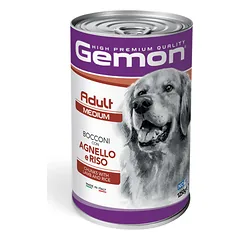
Gemon
1,94 €/kg
2,42 € / 1,3 kg
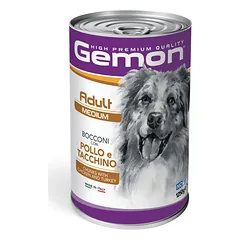
Gemon
1,94 €/kg
2,42 € / 1,3 kg

Sam's Field
2,11 €/kg
27,45 € / 13 kg

2,14 €/kg
30,00 € / 14 kg

Club 4 Paws
2,15 €/kg
42,99 € / 20 kg