


Rottweiler vs St. Bernard
Compare two breeds
Pick two breeds to see them compared side by side.
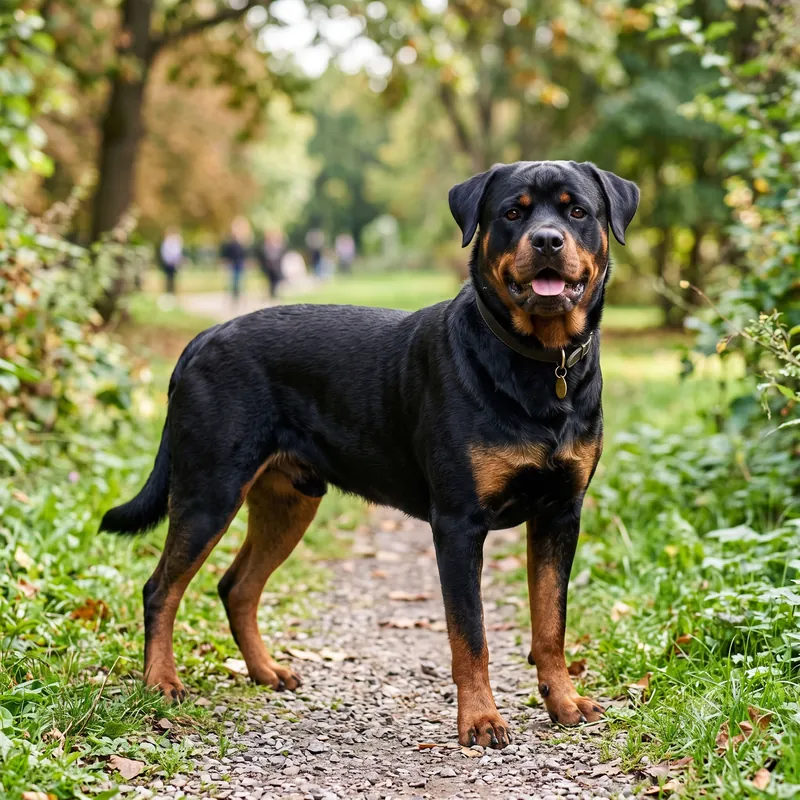
Rottweiler
The Rottweiler's ancestors trace back to Roman drover dogs that pushed cattle alongside the legions across the Alps, later settling in the German town of Rottweil, where the breed took its name driving cattle to market and pulling butchers' carts. The heavily muscled frame, with males reaching up to 60 kilograms, was built for pushing and pulling rather than speed. The short, dense coat needs minimal grooming but sheds heavily twice a year. Hip dysplasia is a serious health concern given the breed's mass, so joint screening in breeding lines matters a great deal. Temperament is calm and self-assured, though early socialisation is essential given a strong natural guarding instinct. Contrary to its tough reputation, a well-raised Rottweiler is often gentle with the family's children. Intelligence runs high, so boredom at home can turn into destructive behaviour. Life expectancy runs 9 to 10 years.
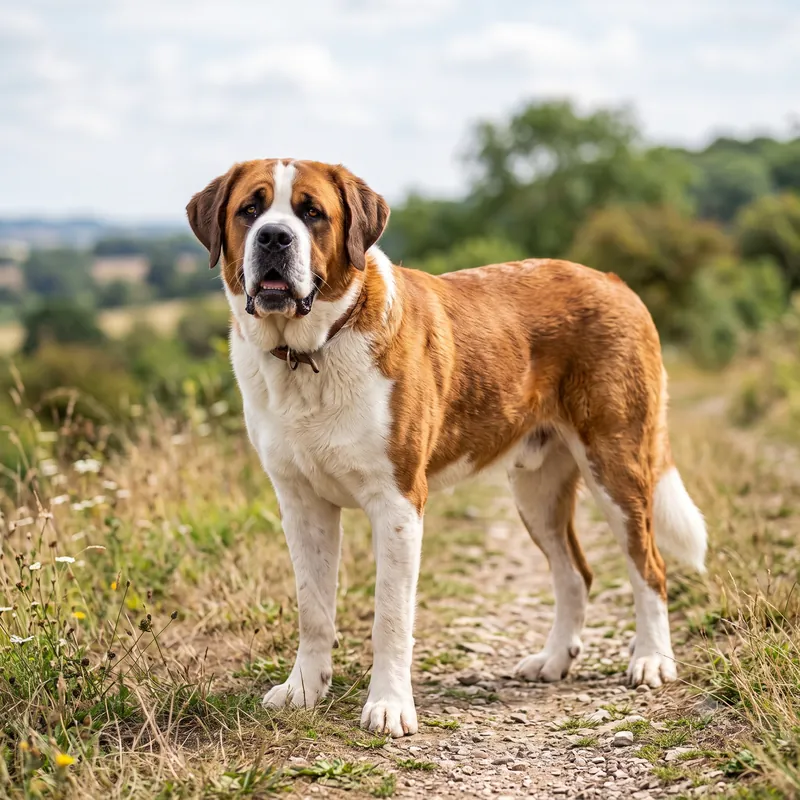
St. Bernard
At a monastery pass in the Swiss Alps, founded in the 11th century by Saint Bernard of Menthon, monks used this breed to search for travelers lost in avalanches and blizzards. The legendary dog Barry is credited with saving over forty people during his working life. A modern male can weigh up to 82 kilograms, ranking it among the heaviest breeds on the FCI list. The coat comes in short or long variants, both dense and cold resistant. Despite the massive size, the breed is known for a calm, patient temperament, particularly around children. Drooling and heavy shedding are simply part of owning a dog this size. Life expectancy runs 8 to 10 years, short given the weight it carries.
At a glance
| Rottweiler | St. Bernard | |
|---|---|---|
| Height (male) | 61.0–68.0 cm | 70.0–90.0 cm |
| Weight (male) | 50.0–60.0 kg | 64.0–82.0 kg |
| Life expectancy | 9–10 yrs | 8–10 yrs |
| Coat | double coat, coarse outer | short-haired or long-haired, dense |
Temperament & Family Life
| Rottweiler | St. Bernard | |
|---|---|---|
| Family friendly | ||
| Good with children | ||
| Good with other dogs | ||
| Friendly with strangers | ||
| Intelligence | ||
| Trainability |
Exercise, Energy & Space
| Rottweiler | St. Bernard | |
|---|---|---|
| Energy level | ||
| Exercise need | ||
| Apartment friendly | ||
| Prey drive | ||
| Hunting instinct |
Guarding & Alertness
| Rottweiler | St. Bernard | |
|---|---|---|
| Guarding instinct | ||
| Watchfulness | ||
| Barking level |
Grooming & Care
| Rottweiler | St. Bernard | |
|---|---|---|
| Shedding | ||
| Drooling | ||
| Grooming need |
Temperament and care scores (1-5) are a general guide based on the breed standard — every individual dog is different.