


Cavalier King Charles Spaniel vs Chihuahua
Compare two breeds
Pick two breeds to see them compared side by side.
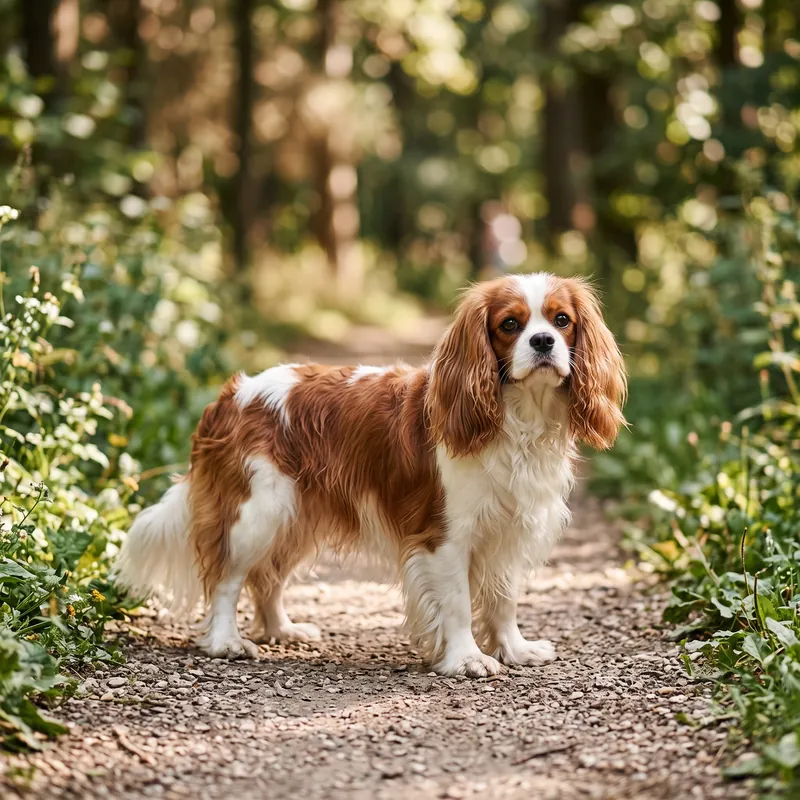
Cavalier King Charles Spaniel
The Cavalier King Charles Spaniel was created in the early twentieth century to recreate the longer-muzzled spaniel type seen in old portraits from the era of King Charles II, who adored such dogs. It differs from the shorter-faced King Charles Spaniel mainly in its longer nose and flatter skull. At around 8 kilograms, it is one of the most popular toy breeds in the world, though it carries a known predisposition to heart valve disease, which makes health screening in breeding lines especially important. The long, silky, slightly wavy coat needs regular brushing. Temperament is exceptionally friendly, rarely aggressive, and it gets along well with children and other pets. That devotion to people can tip into separation anxiety if left alone too long. Despite its small size, it still needs a daily walk. Life expectancy runs 10 to 14 years.

Chihuahua
Named for the Mexican state where 19th-century traders first found small, short-coated dogs kept by local villagers, the Chihuahua is the smallest breed recognized by the FCI, with adults topping out around 3 kilograms. A smooth-coated and a long-coated variety both fall under one breed standard, and litters occasionally produce puppies of the "apple head" domed skull alongside flatter "deer head" types, though only the domed shape is shown competitively. Their small size makes them prone to a soft spot in the skull, called a molera, that can stay open into adulthood in some individuals, similar to a human infant's fontanelle. Despite the size, Chihuahuas often bond intensely with one person and can become genuinely anxious or defensive around strangers or other dogs if not socialized early. They're prone to shivering even in comfortable temperatures, partly from a fast metabolism and partly from stress, not always cold. The breed carries one of the longest average lifespans in the dog world, commonly 14 to 16 years, so a Chihuahua acquired as a puppy is a genuinely long-term commitment. Dental crowding is common given how much tooth has to fit in such a small jaw, making regular cleaning more important than in larger breeds. They travel well and often prefer a single-family household over a busy multi-pet one.
At a glance
| Cavalier King Charles Spaniel | Chihuahua | |
|---|---|---|
| Height (male) | 30.0–33.0 cm | not specified |
| Weight (male) | 5.4–8.0 kg | not specified |
| Life expectancy | 10–14 yrs | 14–16 yrs |
| Coat | long, silky, slightly wavy | smooth coat or long coat (two varieties under one standard) |
Temperament & Family Life
| Cavalier King Charles Spaniel | Chihuahua | |
|---|---|---|
| Family friendly | ||
| Good with children | ||
| Good with other dogs | ||
| Friendly with strangers | ||
| Intelligence | ||
| Trainability |
Exercise, Energy & Space
| Cavalier King Charles Spaniel | Chihuahua | |
|---|---|---|
| Energy level | ||
| Exercise need | ||
| Apartment friendly | ||
| Prey drive | ||
| Hunting instinct |
Guarding & Alertness
| Cavalier King Charles Spaniel | Chihuahua | |
|---|---|---|
| Guarding instinct | ||
| Watchfulness | ||
| Barking level |
Grooming & Care
| Cavalier King Charles Spaniel | Chihuahua | |
|---|---|---|
| Shedding | ||
| Drooling | ||
| Grooming need |
Temperament and care scores (1-5) are a general guide based on the breed standard — every individual dog is different.