


Balinese vs Devon Rex
Compare two breeds
Pick two breeds to see them compared side by side.
Category IV — Siamese and Oriental
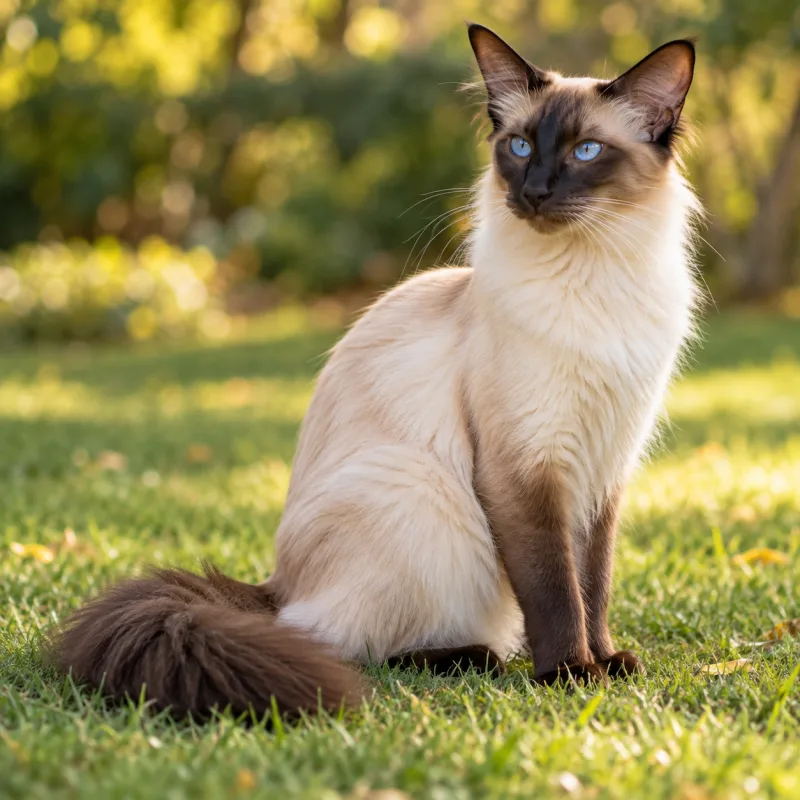
Balinese
The Balinese is a longhaired Siamese-type breed developed in the United States, and its name comes from the graceful dancers of Bali, not from the island itself. The long, silky coat has little undercoat, so it seldom tangles and is easier to maintain than many long coats. Like the Siamese, it has darker markings on the face, ears, legs and tail and blue, almond-shaped eyes. Adults typically weigh around 2.5 to 5 kilograms and are slender. The breed is known for being talkative, intelligent and attached to its family. Life expectancy is typically around 12 to 16 years.
Category IV — Siamese and Oriental
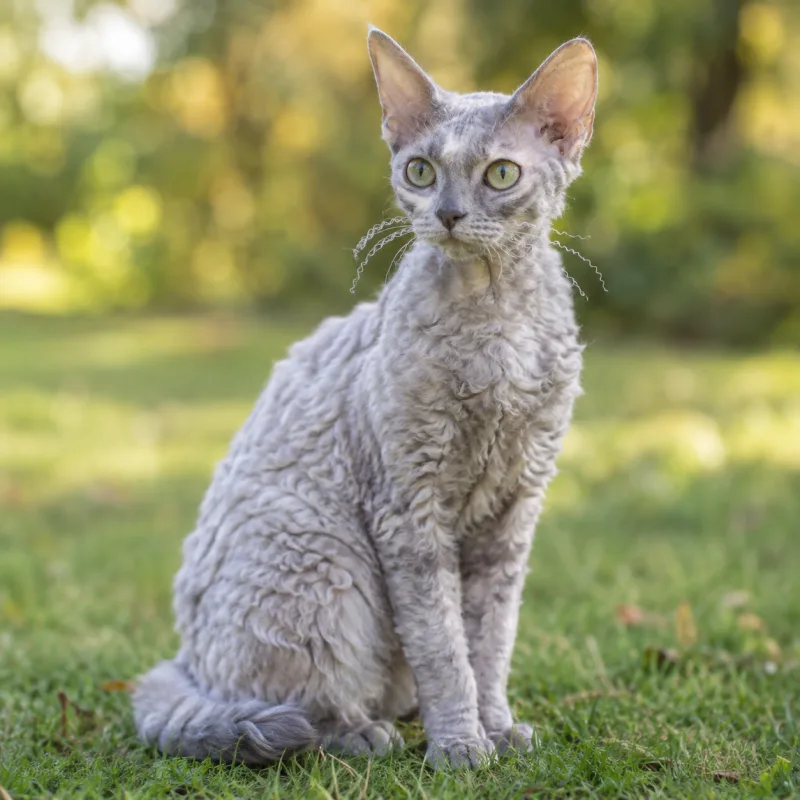
Devon Rex
The Devon Rex arose in Devon, England, around 1960 and has a wavy coat, but the cause is a different gene from the Cornish Rex's, which is why the two are separate breeds. The coat is short, soft and sparse, and the head, with wide-set large ears and big eyes, has an elfin look. Adults typically weigh around 2.5 to 4.5 kilograms. The coat is not thick, so the cat can feel the cold and seek warmth. Grooming is simple, and stroking suits it better than brushing. Devon Rex cats are usually sociable, playful and like to be close to their owner. Life expectancy is typically around 12 to 16 years.
At a glance
| Balinese | Devon Rex | |
|---|---|---|
| Weight (male) | 3.5–5.0 kg | 3.0–4.5 kg |
| Weight (female) | 2.5–4.0 kg | 2.5–3.5 kg |
| Life expectancy | 12–16 yrs | 12–16 yrs |
| Coat | silky, medium-length | wavy, short |
Temperament & Family Life
| Balinese | Devon Rex | |
|---|---|---|
| Family friendly | ||
| Good with children | ||
| Good with dogs | ||
| Friendly with strangers | ||
| Intelligence | ||
| Trainability |
Activity & Living Space
| Balinese | Devon Rex | |
|---|---|---|
| Energy level | ||
| Playfulness | ||
| Hunting instinct | ||
| Apartment friendly |
Personality & Communication
| Balinese | Devon Rex | |
|---|---|---|
| Affection | ||
| Independence | ||
| Vocality |
Grooming & Shedding
| Balinese | Devon Rex | |
|---|---|---|
| Shedding | ||
| Grooming need |
Trait scores (1–5) are editorial estimates, not measurements — every cat is an individual.