

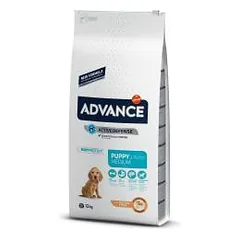
Advance
Advance Puppy Medium sausas maistas vidutinių veislių šuniukams, 12 kg
1,48 €/kg
17,76 € / 12 kg

The Westphalian Dachsbracke is a short-legged hunting dog from Germany's Westphalia region, its low stature letting it track scent under dense brush where a longer-legged dog simply couldn't follow. Males can reach 18 kilograms, with an elongated frame similar to a Dachshund but sturdier and heavier boned. The coat is short and dense, needing only regular brushing. It was bred to trail wounded game, particularly boar or roe deer, and shows a strong nose and steady patience for the work. The breed has a loud, distinctive voice, calling out clearly while on a trail during a hunt. It can be gentle at home but does best with clear, consistent handling. Life expectancy runs 10 to 12 years.
Browse dog food sized right for this breed
Westphalian Dachsbracke: how old in human years?
Energy level
Trainability
Family friendly
Grooming need
Males 30–38 cm
Females 30–38 cm
Males 15–18 kg
Females 13–16 kg
Westphalian Dachsbracke's average temperament and family-life score for this breed is moderate.
Westphalian Dachsbracke's energy and exercise needs are moderate.
Westphalian Dachsbracke's guarding and alertness traits are low.
Westphalian Dachsbracke's grooming needs are low.
Morning, a forest path, and somewhere around your ankles your dog's nose is already reading the overnight news: a hare came through here, a fox slipped past there. The Westphalian Dachsbracke is a short-legged German hound bred to follow a trail and drive game, and that job has never left him. He doesn't need marathons. One longer walk with time to sniff, plus a shorter one, keeps him content. The hunting drive, though, is very strong, so save off-lead time for fenced spaces. Once he has a fresh scent, your voice simply stops reaching him.
Brains aren't his problem; opinions are. He learns willingly when sessions are short and the rewards are tasty, and much less willingly when asked to repeat something for the tenth time. Scent games, hidden treats and trails laid in the garden are about the best entertainment you can offer him. He barks in moderation, but the passing neighbour and the cat on the fence will not go unremarked.
At home he is friendly and attached to his people, usually good with children and happy to stretch out next to you on the sofa. Other dogs and visitors are met calmly, after a thorough sniff; he will never be a guard dog. A house with a garden suits him best, but with his walks taken care of he can settle in a flat. Just spare that long back from leaping off stairs and furniture, and keep him lean.
A short, dense coat is one of those rare cases where grooming fits into a few minutes a week. Go over it with a rubber brush or grooming mitt to lift the dead hair, and that is genuinely enough. Shedding is light: you'll find the odd hair on dark trousers, but you won't be reaching for the vacuum any more than usual. Bathe only when your dog has rolled in something regrettable; after a woodland walk, a damp cloth over the belly and legs does the job.
Because this hound carries his belly and nose so close to the ground, ticks, pine needles and burrs find him easily. After a forest outing, run your hands over his whole body, paying attention to the spaces between the toes and behind the ears. Lift those drop ears once a week and check the inside is clean and dry. Trim the nails when you hear them clicking on the floor: soft forest ground does little to wear them down.
We don't have reliable health information specific to this breed, so we don't list conditions here. Keep up regular vet check-ups, and if you are getting a puppy, ask the breeder about the parents' health testing.
This is general information, not veterinary advice. For your own dog's health, tests and treatment, see a vet.
This list is chosen by the breed's weight (18 kg) rather than the breed itself: shops label food by dog size, so every breed of the same size gets the same list. Prices are updated daily.
≈ 230 g of dry food a day, from €12,63 a month For a neutered, normally active 15,5 kg dog. Calculate for your dog
Advance
1,48 €/kg
17,76 € / 12 kg
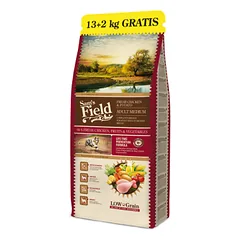
Sam's Field
1,80 €/kg
26,99 € / 15 kg

Country Dog
1,89 €/kg
28,29 € / 15 kg
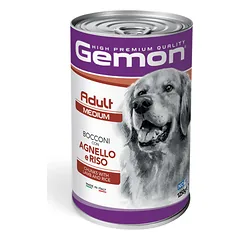
Gemon
1,94 €/kg
2,42 € / 1,3 kg
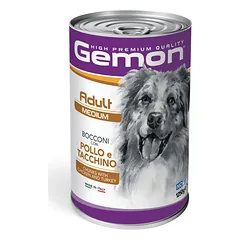
Gemon
1,94 €/kg
2,42 € / 1,3 kg
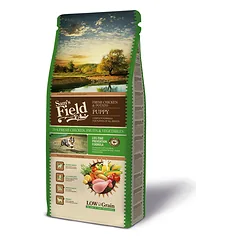
Sam's Field
2,11 €/kg
27,45 € / 13 kg
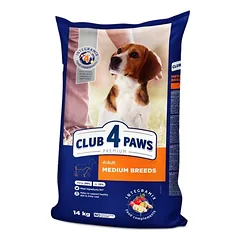
2,14 €/kg
30,00 € / 14 kg
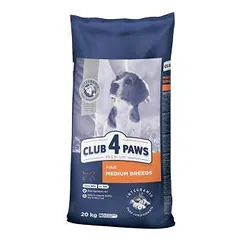
Club 4 Paws
2,15 €/kg
42,99 € / 20 kg