

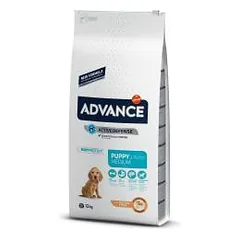
Advance
Advance Puppy Medium sausas maistas vidutinių veislių šuniukams, 12 kg
1,48 €/kg
17,76 € / 12 kg

The West Siberian Laika comes from the Ural and West Siberian regions, used to hunt marten, squirrel and other fur game as well as larger animals like elk. Compared to its East Siberian relative, it's built lighter and more agile, suited to quick movement through trees while tracking quarry by scent. The medium-length double coat handles cold well, and grooming stays relatively simple. A male weighs up to 23 kilograms, energetic and alert, needing a genuinely active daily routine. It's considered one of the most popular hunting Laikas in modern Russia. Life expectancy runs 12 to 14 years.
Browse dog food sized right for this breed
West Siberian Laika: how old in human years?
Energy level
Trainability
Family friendly
Grooming need
Males 55–62 cm
Females 51–58 cm
Males 18–23 kg
Females 16–20 kg
West Siberian Laika's average temperament and family-life score for this breed is moderate.
West Siberian Laika's energy and exercise needs are high.
West Siberian Laika's guarding and alertness traits are moderate.
West Siberian Laika's grooming needs are moderate.
In an autumn forest a laika doesn't go for a walk, it goes to work. The breed was developed in Russia to hunt: to find an animal or a bird, hold it in place and call the hunter over with loud, steady barking. That instinct is fully intact, so a lap of the block is barely a warm-up. It needs long hikes, running, scent work and somewhere to really stretch its legs.
It is clever but has opinions of its own. Training works with patience and short, interesting sessions; the tenth repetition of the same exercise will simply go in one ear and out the other. Off the lead it can follow a trail a very long way, and cats, hares and birds look like a job to it rather than neighbours. A flat is not its place; it is happiest in a house with a yard and a tall, sound fence.
It is loyal to its people without being soppy: it settles in with children it grows up alongside, greets strangers with reserve and announces every visitor out loud. Other dogs can bring friction, so make new introductions calmly and carefully. If you want a companion for forests and long trails, one that stretches out by the door in the evening and quietly checks whether you might be heading out again, a laika won't let you down.
A West Siberian Laika wears a coat made for the taiga: harsh, straight outer hair over a dense, soft undercoat that keeps the warmth in long after your own fingers have gone numb. Brush it right down to the skin once or twice a week, and in spring and autumn, when the undercoat changes, expect to brush daily and to find grey tufts drifting out from under every piece of furniture. The coat never needs cutting, and a bath is only worth it when your laika has rolled in something it shouldn't have.
After a walk in the woods, run your hand through the coat against the lie of the hair: that thick undercoat hides ticks, pine needles and burrs perfectly. Check the upright ears once a week, and keep an eye on the nails, because a dog that spends its days on soft forest floor wears them down less than you might expect.
We don't have reliable health information specific to this breed, so we don't list conditions here. Keep up regular vet check-ups, and if you are getting a puppy, ask the breeder about the parents' health testing.
This is general information, not veterinary advice. For your own dog's health, tests and treatment, see a vet.
This list is chosen by the breed's weight (23 kg) rather than the breed itself: shops label food by dog size, so every breed of the same size gets the same list. Prices are updated daily.
≈ 270 g of dry food a day, from €14,89 a month For a neutered, normally active 19,3 kg dog. Calculate for your dog
Advance
1,48 €/kg
17,76 € / 12 kg

Sam's Field
1,80 €/kg
26,99 € / 15 kg

Country Dog
1,89 €/kg
28,29 € / 15 kg
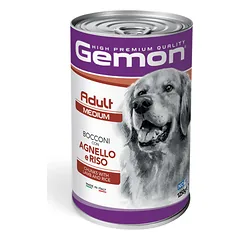
Gemon
1,94 €/kg
2,42 € / 1,3 kg
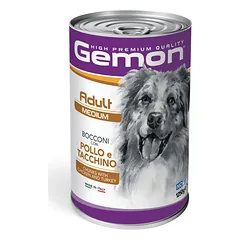
Gemon
1,94 €/kg
2,42 € / 1,3 kg

Sam's Field
2,11 €/kg
27,45 € / 13 kg

2,14 €/kg
30,00 € / 14 kg

Club 4 Paws
2,15 €/kg
42,99 € / 20 kg