

Josera
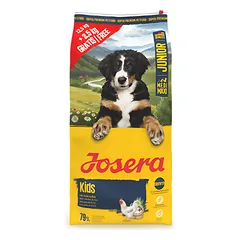
Josera Kids 12,5kg + 2,5kg = 15 kg
1,38 €/kg
37,89 € / 27,5 kg

Also known as: Wirehair Styrian Mountain
In Austria's Styria region this breed was developed in the late 19th century specifically to hunt wild boar through steep, thickly overgrown terrain, where a coarse coat meant protection from brush and thorns. The frame is medium sized, up to 25 kilograms, tough enough for long days working the forest. The wiry coat needs occasional hand-stripping rather than frequent brushing. The breed stayed almost entirely unknown outside Austria and remains rare even within FCI registries. The voice is used to track game and signal direction back to the hunter. It has a working dog's independent streak that doesn't suit apartment life. Life expectancy runs 12 to 14 years.
Browse dog food sized right for this breed
Styrian Coarse-haired Hound: how old in human years?
Energy level
Trainability
Family friendly
Grooming need
Males 48–58 cm
Females 45–54 cm
Males 20–25 kg
Females 18–23 kg
Styrian Coarse-haired Hound's average temperament and family-life score for this breed is moderate.
Styrian Coarse-haired Hound's energy and exercise needs are high.
Styrian Coarse-haired Hound's guarding and alertness traits are moderate.
Styrian Coarse-haired Hound's grooming needs are low.
Once it catches a fresh trail, your voice becomes background noise: nose down, tail up, and a moment later the woods ring with its bay. The Styrian Coarse-haired Hound is an Austrian mountain hound, bred to follow game doggedly over hard ground for a long time, and that job matters to it far more than any sofa.
It has plenty of energy and stamina, and its prey drive and hunting instinct are about as strong as they come. Every day it needs long walks, ideally in woods or hills, and work for its nose: tracking, search games. It is clever but independent, so training takes patience and consistency, and recall with a hare in the air will be a lifelong project. Let it off the lead only where it is fenced in.
With its own people it is loyal and calm indoors, provided the day gave it enough to do, but it is reserved with strangers and will announce a visitor out loud. It gets along fairly well with other dogs; cats and small pets call for real caution. A flat is no place for it: it is happiest in the countryside or with a hunter who has a yard and time to head into the forest.
The Styrian Coarse-haired Hound wears a hard, harsh, wiry coat, and it is a work outfit: in mountain scrub and scree it shrugs off branches, rain and wind. It asks for little. Once a week, go over it with a stiff brush to lift out dead hair and grit, and after a forest outing check for needles and seeds caught in it. Shedding is moderate, so you won't be wading through hair at home.
It rarely needs a bath: the harsh hair lets go of mud once it dries, and washing too often only softens it. Look into the hanging ears every week; redness, discharge or a bad smell is a reason to see a vet. After running over rocky ground, check the pads, and trim the nails if they don't wear down by themselves.
We don't have reliable health information specific to this breed, so we don't list conditions here. Keep up regular vet check-ups, and if you are getting a puppy, ask the breeder about the parents' health testing.
This is general information, not veterinary advice. For your own dog's health, tests and treatment, see a vet.
This list is chosen by the breed's weight (25 kg) rather than the breed itself: shops label food by dog size, so every breed of the same size gets the same list. Prices are updated daily.
≈ 295 g of dry food a day, from €16,14 a month For a neutered, normally active 21,5 kg dog. Calculate for your dog
Josera
1,38 €/kg
37,89 € / 27,5 kg
Sam's Field
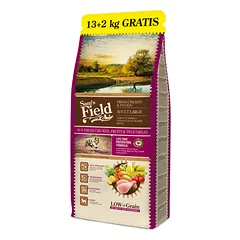
1,80 €/kg
26,99 € / 15 kg

Country Dog
1,89 €/kg
28,29 € / 15 kg
Club 4 Paws
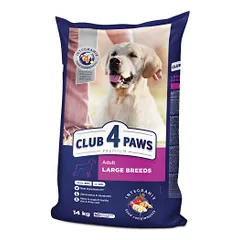
1,92 €/kg
26,94 € / 14 kg
Diamant
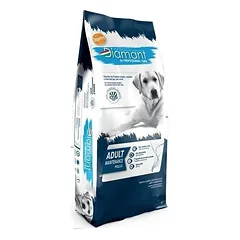
1,93 €/kg
28,99 € / 15 kg
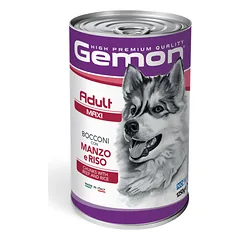
Gemon
1,94 €/kg
2,42 € / 1,3 kg

BIO FORM
2,00 €/kg
40,00 € / 20 kg

BIO FORM
2,00 €/kg
40,00 € / 20 kg