


Josera
Josera Kids 12,5kg + 2,5kg = 15 kg
1,38 €/kg
37,89 € / 27,5 kg

Also known as: Sabueso Hound, Spanish Beagle, Sabueso Cantabro, Large Spanish Hound, Cantabrian Scenthound
The Sabueso Español is an old Spanish scenthound whose ancestors were used in hunting as far back as the Middle Ages, with the modern type shaped as a trailing dog for wild boar and larger game. Its most striking trait is a pair of exceptionally large, low-hanging ears, which hunters believe help stir scent particles up off the ground toward the nose while trailing. The short, dense coat needs minimal care, and a male weighs up to 25 kilograms. The breed is known for an especially powerful nose, ranked among the strongest of Europe's scenthounds, and it typically hunts in packs, giving voice on a trail for hours at a stretch. At home it is calm but carries a strong hunting drive. Life expectancy runs 10 to 12 years.
Browse dog food sized right for this breed
Spanish Hound: how old in human years?
Energy level
Trainability
Family friendly
Grooming need
Males 52–57 cm
Females 48–52 cm
Males 18–25 kg
Females 16–22 kg
Spanish Hound's average temperament and family-life score for this breed is moderate.
Spanish Hound's energy and exercise needs are high.
Spanish Hound's guarding and alertness traits are moderate.
Spanish Hound's grooming needs are low.
In the dry grass of the Spanish hills a trail can be hours old, and that is exactly what the Spanish Hound was bred for: nose to the ground, ears nearly sweeping the path, and a voice that tells the hunter which way the chase is going. It is patient and tireless, a dog that works long and at its own pace, so it needs a great deal of exercise: long walks, tracking, time out in the fields.
It can be trained, but not in a hurry. It is independent and stubborn as a true hound, and the call of its nose is regularly louder than your voice, so short, cheerful sessions with treats work better than strictness. Its prey drive is very strong, so off-lead running belongs in a fenced area, and a cat at home needs to be introduced to it very carefully.
With its own family it is gentle and affectionate, it gets along with children and usually with other dogs, and it is reserved with strangers and announces them with a bark. It is too big and too loud for a flat; it is happiest in a house with a garden, with people who hunt or simply spend a lot of time outdoors. After a good hike it turns into a lazy sofa dog, which is perhaps the best reward for your efforts.
The Spanish Hound's coat is short and dense, so a comb will hardly ever come out: a weekly going-over with a rubber mitt or brush and a wipe with a damp cloth is enough. It sheds little, the hair doesn't tangle, and a bath is needed only once the smell reaches you before the dog does.
The long, hanging ears, on the other hand, are something you will check regularly. Lift them once a week and after every hike through scrub: inside they should be clean and dry, free of seeds, redness or a bad smell, and if you notice anything amiss, see a vet. After the woods, check the coat for ticks, look over the paws, and trim the nails if they don't wear down on their own. The lips leave the occasional damp mark, but a towel by the bowl handles it.
We don't have reliable health information specific to this breed, so we don't list conditions here. Keep up regular vet check-ups, and if you are getting a puppy, ask the breeder about the parents' health testing.
This is general information, not veterinary advice. For your own dog's health, tests and treatment, see a vet.
This list is chosen by the breed's weight (25 kg) rather than the breed itself: shops label food by dog size, so every breed of the same size gets the same list. Prices are updated daily.
≈ 280 g of dry food a day, from €15,46 a month For a neutered, normally active 20,3 kg dog. Calculate for your dog
Josera
1,38 €/kg
37,89 € / 27,5 kg

Sam's Field
1,80 €/kg
26,99 € / 15 kg

Country Dog
1,89 €/kg
28,29 € / 15 kg
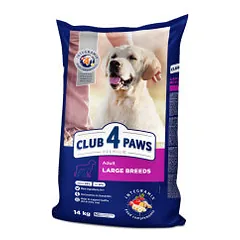
Club 4 Paws
1,92 €/kg
26,94 € / 14 kg

Diamant
1,93 €/kg
28,99 € / 15 kg

Gemon
1,94 €/kg
2,42 € / 1,3 kg

BIO FORM
2,00 €/kg
40,00 € / 20 kg

BIO FORM
2,00 €/kg
40,00 € / 20 kg