

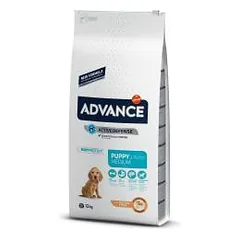
Advance
Advance Puppy Medium sausas maistas vidutinių veislių šuniukams, 12 kg
1,48 €/kg
17,76 € / 12 kg

Also known as: Wirehaired Istrian Hound, Istrski ostrodlaki gonič
The Istrian Wirehaired Hound, younger than its smooth-coated relative, emerged in the late nineteenth century by crossing local hounds with wire-coated types for better protection against cold and thorny brush. The wiry white coat with tan patches lets it work in colder weather than the shorthaired variety. An adult male weighs around 22 kilograms, sturdy and enduring, built for long hunting days across Istria's rocky terrain. Coat care is more involved than for its shorthaired cousin, needing periodic hand-stripping. Its voice carries far while trailing game. The breed is rarely seen outside Croatia. Temperament is persistent and work-oriented, needing serious daily exercise. Life expectancy runs 12 to 14 years.
Browse dog food sized right for this breed
Istrian Wirehaired Hound: how old in human years?
Energy level
Trainability
Family friendly
Grooming need
Males 46–54 cm
Females 46–54 cm
Males 16–22 kg
Females 16–22 kg
Istrian Wirehaired Hound's average temperament and family-life score for this breed is moderate.
Istrian Wirehaired Hound's energy and exercise needs are high.
Istrian Wirehaired Hound's guarding and alertness traits are low.
Istrian Wirehaired Hound's grooming needs are low.
On a stony hillside a white shape flickers, vanishes behind the junipers, and a moment later a high, insistent bay fills the whole valley. The Istrian Wirehaired Hound is a Croatian scenthound that follows game on the trail and leads the hunter along by voice, and it has both the nose and the stamina for the job.
It needs plenty of energy spent and plenty of exercise: long hikes every day, running somewhere safe, tracking or search games. It learns reasonably well, but once it catches a scent it forgets everything it knew a minute ago, so recall takes a lot of patience and off-lead time belongs in fenced areas. Its prey drive is very strong, and cats and small pets interest it, though not as friends. There will be barking, and a fair amount of it.
At home it is pleasant company: friendly with its family, patient with children and usually very good with other dogs. It is fairly neutral with strangers and won't make a guard. A flat is too small for it, and long hours alone don't suit it either; it does best with an active family or a hunter who has a garden and time for the fields.
A white dog and an autumn forest are a combination you'll get to know in the first week. The Istrian Wirehaired Hound's coat is hard, rough and white, so dirt shows from a long way off; the good news is that once it dries, most of it falls out on its own. This dog sheds little and needs little: run a stiff brush over the coat once a week, pluck out the old hair by hand a few times a year, and bath it only when you really can't avoid it, so the coat keeps its harsh texture.
After walks in the fields, check between the toes, the armpits and the edges of the ears, where seeds and thorns get caught. Lift the hanging ears every week and look inside; redness, discharge or a bad smell means it's time for the vet. Check the nails every few weeks.
We don't have reliable health information specific to this breed, so we don't list conditions here. Keep up regular vet check-ups, and if you are getting a puppy, ask the breeder about the parents' health testing.
This is general information, not veterinary advice. For your own dog's health, tests and treatment, see a vet.
This list is chosen by the breed's weight (22 kg) rather than the breed itself: shops label food by dog size, so every breed of the same size gets the same list. Prices are updated daily.
≈ 270 g of dry food a day, from €14,71 a month For a neutered, normally active 19 kg dog. Calculate for your dog
Advance
1,48 €/kg
17,76 € / 12 kg

Sam's Field
1,80 €/kg
26,99 € / 15 kg

Country Dog
1,89 €/kg
28,29 € / 15 kg
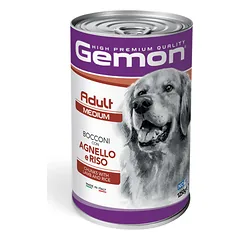
Gemon
1,94 €/kg
2,42 € / 1,3 kg
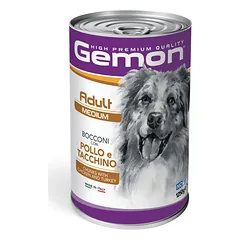
Gemon
1,94 €/kg
2,42 € / 1,3 kg

Sam's Field
2,11 €/kg
27,45 € / 13 kg

2,14 €/kg
30,00 € / 14 kg

Club 4 Paws
2,15 €/kg
42,99 € / 20 kg