

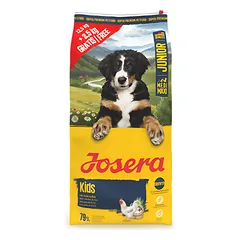
Josera
Josera Kids 12,5kg + 2,5kg = 15 kg
1,38 €/kg
37,89 € / 27,5 kg

Originating in France's Nièvre region, this griffon is considered one of the oldest French scenthound types, once used to hunt wild boar through dense, thorny woodland. The rough, tousled coat protected it from sharp branches and thorns, essential for working thick undergrowth. A male can weigh up to 25 kilograms on a medium sized, muscular frame. The breed nearly disappeared during the French Revolution along with the noble hunting traditions it served, and was later reconstructed by dedicated breeders in the 20th century. Today it remains rare, kept mostly by hunting enthusiasts within France. Its temperament tends to be calm indoors but tenacious and driven when working outdoors. Life expectancy runs 12 to 13 years.
Browse dog food sized right for this breed
Griffon Nivernais: how old in human years?
Energy level
Trainability
Family friendly
Grooming need
Males 55–62 cm
Females 53–60 cm
Males 22–25 kg
Females 20–23 kg
Griffon Nivernais's average temperament and family-life score for this breed is moderate.
Griffon Nivernais's energy and exercise needs are high.
Griffon Nivernais's guarding and alertness traits are low.
Griffon Nivernais's grooming needs are low.
If you have ever watched a dog catch a scent and forget you exist, you know what to expect from a Griffon Nivernais. This French scenthound was bred to follow game patiently over woods and hills for hours, and its stamina is remarkable. Its energy and exercise needs sit at the very top of the scale, so it needs real work rather than a stroll: long hikes, scent games, and ideally hunting or another job where it can use its nose.
Training it is not easy. It isn't dim, just independent: it was bred to make its own decisions far from the hunter. Patience, consistency and treats help, but don't expect a reliable recall in open country, so a long line and a fenced area are a must. Small animals are prey to it, not neighbours. It also likes to announce its finds with its voice, which neighbours in a block of flats are unlikely to appreciate.
It gets on famously with other dogs, having been bred to work in a pack. With its family it is gentle, if more reserved than a typical companion dog, and with strangers it is wary at first but not hostile; as a guard it is a poor choice. It suits country life or a house with a big garden best, with a family that walks, runs or hunts itself. Once it has had its day's work, it collapses by the stove in the evening and sleeps like a stone.
The Griffon Nivernais always looks as though it has just come out of a thicket, and that is not a flaw. The coat is rough and wiry, a little tousled, especially on the muzzle where it forms a beard and eyebrows. It sheds little and is straightforward to care for: once a week, go over it with a firm brush to lift dead hair and shake out whatever the woods left behind. There is no need to clip it, as that harsh texture is exactly what protects the dog from thorns, rain and wind.
The beard is a story of its own: it collects water from the bowl, bits of dinner and mud, so a daily wipe with a damp cloth keeps it civilised. After every outing in the woods, feel your way through the coat down to the skin, since ticks and thorns hide beautifully in a wiry coat, and check the paws and the hanging ears. Bathe only when you really must: frequent washing softens a rough coat.
We don't have reliable health information specific to this breed, so we don't list conditions here. Keep up regular vet check-ups, and if you are getting a puppy, ask the breeder about the parents' health testing.
This is general information, not veterinary advice. For your own dog's health, tests and treatment, see a vet.
This list is chosen by the breed's weight (25 kg) rather than the breed itself: shops label food by dog size, so every breed of the same size gets the same list. Prices are updated daily.
≈ 305 g of dry food a day, from €16,70 a month For a neutered, normally active 22,5 kg dog. Calculate for your dog
Josera
1,38 €/kg
37,89 € / 27,5 kg
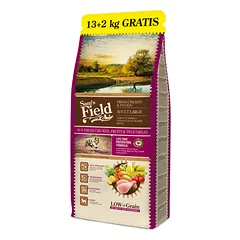
Sam's Field
1,80 €/kg
26,99 € / 15 kg

Country Dog
1,89 €/kg
28,29 € / 15 kg
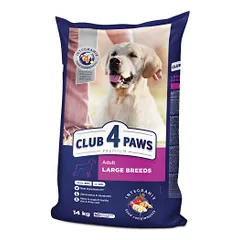
Club 4 Paws
1,92 €/kg
26,94 € / 14 kg
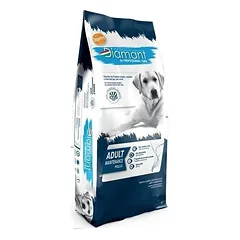
Diamant
1,93 €/kg
28,99 € / 15 kg
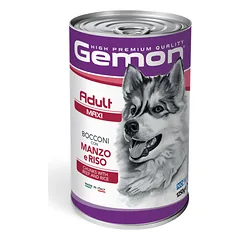
Gemon
1,94 €/kg
2,42 € / 1,3 kg
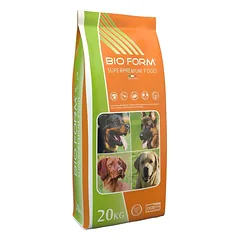
BIO FORM
2,00 €/kg
40,00 € / 20 kg
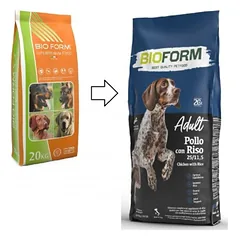
BIO FORM
2,00 €/kg
40,00 € / 20 kg