

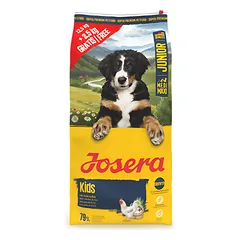
Josera
Josera Kids 12,5kg + 2,5kg = 15 kg
1,38 €/kg
37,89 € / 27,5 kg

Also known as: Great Gascony Hound
This is believed to be one of the oldest French scenthounds, with roots reaching back to medieval hunts held by nobility in the Gascony region. The distinctive short coat with dense dark speckling over a white base creates the impression often called blue, though it's actually formed by a mix of black and white hairs. A male can weigh up to 35 kilograms, making it one of the larger and heavier French hounds. It was bred to work in packs, following large game trails for hours at a steady, patient pace. Numbers dropped sharply through the 20th century as pack hunting traditions declined in France. Today it's considered rare even in its home country. Life expectancy runs 10 to 12 years.
Browse dog food sized right for this breed
Great Gascony Blue: how old in human years?
Energy level
Trainability
Family friendly
Grooming need
Males 65–72 cm
Females 62–68 cm
Males 32–35 kg
Females 30–32 kg
Great Gascony Blue's average temperament and family-life score for this breed is moderate.
Great Gascony Blue's energy and exercise needs are high.
Great Gascony Blue's guarding and alertness traits are moderate.
Great Gascony Blue's grooming needs are low.
The first impression is misleading: long ears, a slightly mournful look, an unhurried walk, as if the dog had all day. That impression evaporates the moment its nose finds a trail. The Great Gascony Blue is an old hound from south-western France, bred to hunt in a pack and follow game for a long time, and its deep, ringing voice carries a long way. It needs a lot of exercise: long walks and hikes every day, ideally out in the country.
It is clever but independent, so training takes patience, praise and treats rather than a stern voice. Work on recall from puppyhood and don't expect perfection: once it has a scent, this dog is a hound first. Its prey drive is very strong, so off-lead running is only safe in a fenced area, and cats and small pets should keep their distance. A flat doesn't suit it, and its voice will announce it to the whole street.
At home it is gentle, affectionate and fairly patient, and it gets on well with children and other dogs. It greets strangers calmly, sometimes announces them with its voice, but makes a poor guard. Picture it in the evening after a long hike, stretched across half the hallway: that is its idea of a perfect day. It suits an active family or a hunter best, a house with a large fenced garden and owners who don't mind muddy boots.
The Great Gascony Blue is only blue from a distance: up close you can see that the bluish sheen comes from fine black mottling on a white coat. The coat is short and dense, so care is simple: once a week, run a rubber mitt or a bristle brush over it to lift dead hair and dust. It sheds little, dried mud falls off by itself, and a bath is for when you really can't avoid one.
The ears and the muzzle need the most attention. Lift those long, low-hanging ears every week and look inside: redness, discharge or a bad smell is a reason to see a vet. The lips hang, so a drink can leave a few drops on the floor, and the folds around the mouth are worth a wipe. After hikes, check the paws and skin for ticks and scratches, and trim the nails if they don't wear down on their own.
We don't have reliable health information specific to this breed, so we don't list conditions here. Keep up regular vet check-ups, and if you are getting a puppy, ask the breeder about the parents' health testing.
This is general information, not veterinary advice. For your own dog's health, tests and treatment, see a vet.
This list is chosen by the breed's weight (35 kg) rather than the breed itself: shops label food by dog size, so every breed of the same size gets the same list. Prices are updated daily.
≈ 400 g of dry food a day, from €21,90 a month For a neutered, normally active 32,3 kg dog. Calculate for your dog
Josera
1,38 €/kg
37,89 € / 27,5 kg
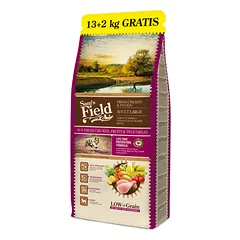
Sam's Field
1,80 €/kg
26,99 € / 15 kg

Country Dog
1,89 €/kg
28,29 € / 15 kg
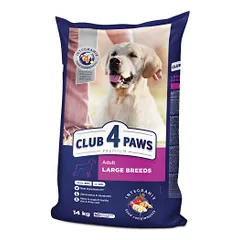
Club 4 Paws
1,92 €/kg
26,94 € / 14 kg
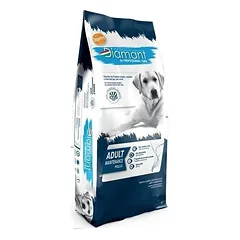
Diamant
1,93 €/kg
28,99 € / 15 kg
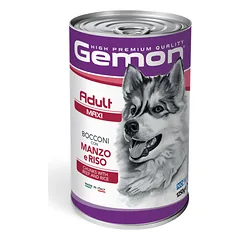
Gemon
1,94 €/kg
2,42 € / 1,3 kg

BIO FORM
2,00 €/kg
40,00 € / 20 kg
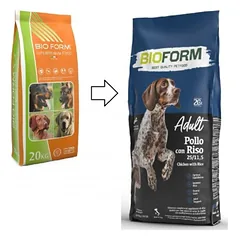
BIO FORM
2,00 €/kg
40,00 € / 20 kg