

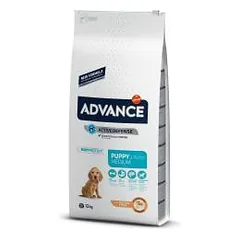
Advance
Advance Puppy Medium sausas maistas vidutinių veislių šuniukams, 12 kg
1,48 €/kg
17,76 € / 12 kg

The Dunker is named for Norwegian breeder Wilhelm Dunker, who in the 19th century crossed local scenthounds with Russian Harlequin Hounds to produce a dog able to trail hare through snow while giving voice on the scent. The short, dense coat handles cold Norwegian winters, and a male weighs around 24 kilograms, with an enduring build suited to covering mountainous ground for hours. Some individuals carry the merle-like, marbled coat pattern with pale eyes inherited from those Russian crosses. The breed traditionally hunts alone, trailing scent from a distance with a loud, rhythmic bark so the hunter can follow its movement without seeing the dog. In Norway it remains primarily a working dog rather than a house pet. Life expectancy runs 12 to 14 years.
Browse dog food sized right for this breed
Dunker (Norwegian Hound): how old in human years?
Energy level
Trainability
Family friendly
Grooming need
Males 47–55 cm
Females 45–53 cm
Males 18–24 kg
Females 16–22 kg
Dunker (Norwegian Hound)'s average temperament and family-life score for this breed is moderate.
Dunker (Norwegian Hound)'s energy and exercise needs are high.
Dunker (Norwegian Hound)'s guarding and alertness traits are low.
Dunker (Norwegian Hound)'s grooming needs are low.
On an October morning in a Norwegian forest, the Dunker works alone: it picks up a hare's trail, drives it with a ringing voice and keeps it from vanishing while the hunter waits at his post. The Dunker (Norwegian Hound) was bred for exactly that kind of independent, tireless work, and the independence doesn't switch off when the season ends.
It has energy and stamina to spare, and its prey drive and hunting instinct are very strong. Every day it needs long walks, ideally in woodland, and work for its nose: tracking or search games will tire it out better than laps of a sports field. It is intelligent and learns willingly, but once it smells a hare your commands slip into second place, so let it off the lead only where it is fenced in.
At home it is calm, friendly and affectionate, good with children and other dogs, not hostile to strangers and no guard. A flat is too small for it, and long hours alone don't suit it; it does best with an active family or a hunter who has a yard and time to head into the forest in any weather.
The Dunker's coat is short and dense, made for Norwegian forests, where it has to stand up to wet snow and cold autumn rain. Looking after it is simple: go over it once a week with a rubber brush or mitt, and more often at the turn of the seasons, when more hair comes out. Shedding is moderate, and mud brushes easily off the dense hair once it dries.
After a day in the woods, check the pads and between the toes for scrapes, ice balls or stuck needles, and the coat for ticks. Lift the hanging ears weekly and look inside; redness, discharge or a bad smell is a reason to see a vet. Trim the nails if they don't wear down on their own.
We don't have reliable health information specific to this breed, so we don't list conditions here. Keep up regular vet check-ups, and if you are getting a puppy, ask the breeder about the parents' health testing.
This is general information, not veterinary advice. For your own dog's health, tests and treatment, see a vet.
This list is chosen by the breed's weight (24 kg) rather than the breed itself: shops label food by dog size, so every breed of the same size gets the same list. Prices are updated daily.
≈ 280 g of dry food a day, from €15,29 a month For a neutered, normally active 20 kg dog. Calculate for your dog
Advance
1,48 €/kg
17,76 € / 12 kg
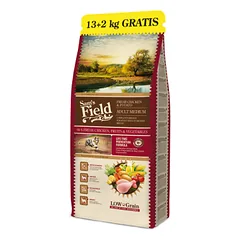
Sam's Field
1,80 €/kg
26,99 € / 15 kg

Country Dog
1,89 €/kg
28,29 € / 15 kg
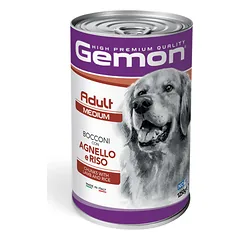
Gemon
1,94 €/kg
2,42 € / 1,3 kg
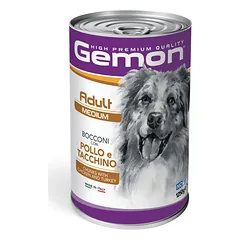
Gemon
1,94 €/kg
2,42 € / 1,3 kg
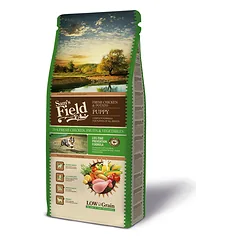
Sam's Field
2,11 €/kg
27,45 € / 13 kg
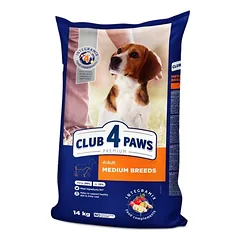
2,14 €/kg
30,00 € / 14 kg
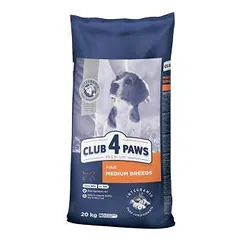
Club 4 Paws
2,15 €/kg
42,99 € / 20 kg