


Real Dog
Real Dog sausas maistas suaugusiems, didelių-milžiniškų veislių, šunims su vištiena ir ryžiais 20kg
2,11 €/kg
42,15 € / 20 kg

Also known as: Scotch deerhounds, Deerhound, Scottish
The Deerhound hunted red deer across the Scottish Highlands for centuries, built to run at high speed over rough, rocky terrain that demanded both speed and stamina. At one point ownership was restricted to Scottish nobility, with commoners forbidden from keeping one. An adult male can weigh up to 45.5 kilograms, yet the frame stays lean, built for speed rather than raw power. The rough, wiry coat protected against the cold and thorny brush of the Highlands. Despite its imposing size, temperament is notably gentle and calm, often called one of the friendliest large breeds. As with many giant breeds, lifespan runs relatively short. Heart disease is an important health consideration when choosing a breeder. Speed and a strong prey drive mean an unfenced dog can range far chasing a moving target. Life expectancy runs 8 to 10 years.
Browse dog food sized right for this breed
Deerhound: how old in human years?
Energy level
Trainability
Family friendly
Grooming need
Males not specified
Females not specified
Males 39.5–45.5 kg
Females 29.5–36.5 kg
Deerhound's average temperament and family-life score for this breed is moderate.
Deerhound's energy and exercise needs are moderate.
Deerhound's guarding and alertness traits are low.
Deerhound's grooming needs are low.
The biggest piece of furniture in your home may not be the sofa but whoever is lying on it: a Deerhound spends half the day with its endless legs stretched out, sighing as if it had just run the length of the Scottish Highlands. These dogs were bred to course deer, which explains both the calm indoors and what happens outside: spot a running hare or roe deer, and in seconds it will be on the far side of the field. It needs long daily walks and the chance, a few times a week, to run flat out somewhere safely fenced.
It learns without hurry and more willingly when it sees the point; harshness only makes it close up, while a calm, gentle tone and patience work best. As for recall, accept the truth: when the chase instinct switches on, the ears briefly switch off, so near roads and in open country it stays on the lead. Small pets such as cats and rabbits may look like work to it, so introduce them very carefully.
With people it is gentle, patient and fond of company, and it gets on well with children and other dogs. As a guard it is hopeless: a visitor is more likely to be greeted with a wag than a bark. A flat is too cramped, not because of its temperament but its size, so it is happiest in a house with a garden and a family that won't mind when the tail clears the coffee table.
The Deerhound's coat is harsh, wiry and close-lying, with a softer beard and moustache, and it asks surprisingly little of you. Once a week, go over it with a brush and a wide-toothed comb, especially on the chest, behind the ears and on the legs, where the hair can tangle. It sheds lightly, and mud drops off a harsh coat once dry, so baths are rare, which is just as well, because not every bathtub fits a sighthound.
Give more attention to what lies beneath. A sighthound's skin is thin, so after a run through the undergrowth, sweep your hand over the whole body for scratches, ticks and thorns between the toes. Wipe the beard after meals and drinks so damp doesn't build up, check the small, folded ears weekly and wipe the eyes with a damp cloth. Redness, a smell or unusual discharge is a reason to see a vet.
Big sighthounds don't live as long as small dogs, and the Deerhound lives around eight to ten years, which makes every healthy year one to savour. Heart and bone conditions are known in the breed, and the deep chest means you should recognise the signs of a twisted stomach. Ask the breeder about the parents' health testing before you take a puppy home, and keep up regular vet check-ups so changes are caught in time.
This is general information, not veterinary advice. For your own dog's health, tests and treatment, see a vet.
This is a disease of the heart muscle in which the heart enlarges, its walls thin, and it can no longer pump blood as strongly. At first you might only notice your dog tiring sooner, breathing faster at rest, or starting to cough. A Deerhound is naturally calm indoors, so lost stamina is easy to mistake for laziness; if your dog suddenly collapses or faints, it needs a vet immediately.
This is a malignant bone tumour that can develop in the long bones of the legs. You might notice a limp that doesn't ease with rest, or a hard, painful swelling on a leg. The Deerhound is a tall, large dog, so show any lingering limp or lump on a leg to a vet as soon as you can rather than waiting for it to pass.
The stomach fills with gas, swells and can twist on itself, pinching off its blood supply. The dog becomes restless, tries to vomit without bringing anything up, drools, and its belly looks tight and swollen. The narrow, deep-chested Deerhound has exactly the build this threatens, and it is an emergency: get to a vet immediately.
This list is chosen by the breed's weight (46 kg) rather than the breed itself: shops label food by dog size, so every breed of the same size gets the same list. Prices are updated daily.
≈ 450 g of dry food a day, from €24,65 a month For a neutered, normally active 37,8 kg dog. Calculate for your dog
Real Dog
2,11 €/kg
42,15 € / 20 kg

Sam's Field
2,56 €/kg
33,26 € / 13 kg
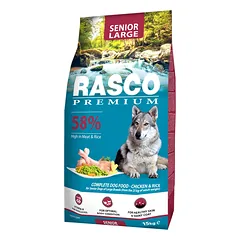
Rasco
2,67 €/kg
39,99 € / 15 kg
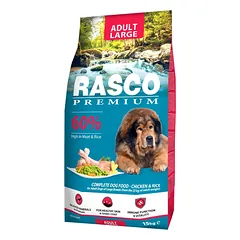
Rasco
2,67 €/kg
39,99 € / 15 kg
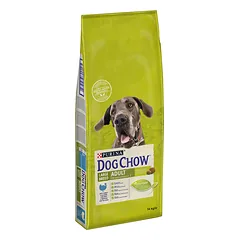
Purina
2,71 €/kg
37,96 € / 14 kg
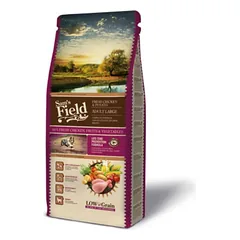
Sam's Field
2,77 €/kg
35,99 € / 13 kg
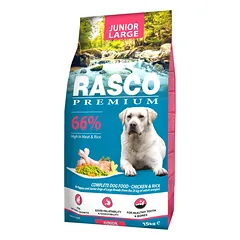
Rasco
2,80 €/kg
41,99 € / 15 kg
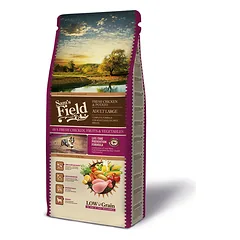
Sam's Field
2,85 €/kg
37,04 € / 13 kg