

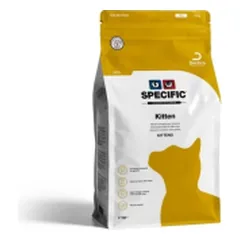
Specific
Specific FPD Kitten sausas maistas augantiems kačiukams, 400 kg
0,01 €/kg
5,59 € / 400 kg

Also known as: Honey bear cat
The Ragdoll was developed in California in the 1960s and is one of the largest semi-longhaired cats, with males commonly weighing around 5.5 to 9 kilograms. The name is usually linked to the breed's habit of going relaxed and soft when picked up. The medium-length, silky coat usually carries darker markings on the face, legs and tail, the eyes are blue, and the coat mats less readily than many long coats. The breed matures slowly, often taking three to four years to reach full size. Ragdolls are typically gentle, sociable and strongly attached to their families, and they settle well in a calm home. Life expectancy is typically around 12 to 16 years.
Ragdoll: how old in human years?
Energy level
Playfulness
Family friendly
Grooming need
Males 5.4–9 kg
Females 4–6.8 kg
Ragdoll: average score for sociability and trainability is high.
Ragdoll: average score for activity and living space is moderate.
Ragdoll: average score for personality and communication is moderate.
Ragdoll: grooming and shedding demands are moderate.
The 1–5 trait scores are editorial estimates, not measurements. Every cat is an individual, so treat them as a general guide.
Pick up a Ragdoll and, instead of wriggling, it may lean its full weight into you like a sack of flour, which is where the name comes from. Not every one goes limp, but nearly all of them want to be wherever you are: following you from room to room, meeting you at the door, waiting patiently outside the bathroom.
It has modest energy and next to no hunting drive, so play is gentle: a ball down the hallway, a feather on a wand, a short burst of chasing. It learns quite readily to come when called or to fetch a toy. It has no urge to climb to the ceiling, so a wide, steady scratching post with low shelves suits it better than a tall tower.
A Ragdoll gets on beautifully with children, dogs and other cats, and greets visitors with curiosity rather than from under the bed. Its voice is soft and used sparingly. Being so trusting, it is safest indoors or on an enclosed balcony, and long days alone are hard on it, so if you work far from home, a second cat is worth thinking about.
A Ragdoll's coat is silky and semi-long with a light undercoat, so it tangles less than you would expect from such a fluffy animal. Run a metal comb through it twice a week, paying attention to the spots behind the ears, the armpits and the belly, where the hair rubs most and knots first. During the spring and autumn moult, comb every other day.
As you comb, part the fur with your fingers and look at the skin: flakes, scabs or scratched patches are easy to miss under silk. Wipe any matter from the corners of those blue eyes with a clean damp cloth, and check the ears weekly; redness, dark debris or a smell is a reason to ask the vet.
Big blue eyes and a body that goes soft in your arms make the Ragdoll look like a stuffed toy, but under the fur is a large, heavy cat that lives twelve to sixteen years. The conditions to know about in the breed are heart disease, bladder stones, weight and joint problems, and allergies. Ask the breeder about the parents' health testing before you take a kitten, and keep up routine vet visits afterwards.
This is general information, not veterinary advice. For your own cat's health, tests and treatment, see a vet.
Heart disease covers several problems that leave the heart pumping blood less well. A Ragdoll is calm by nature, so less interest in moving is easy to mistake for temperament; notice instead whether it breathes fast or hard while resting. Sudden weakness in the back legs or fainting means it needs a vet immediately.
Mineral stones that form in the bladder irritate its wall, so passing urine hurts. A Ragdoll complains quietly, so keep an eye on the litter tray: if it keeps going back and produces only a few drops, or the urine turns pinkish, call the vet. If the cat strains and passes nothing at all, it needs a vet immediately.
Extra weight loads the joints, and sore joints take away the wish to move, so the circle keeps turning. A Ragdoll is big, not much given to racing about, and its fluffy coat hides a few added pounds very well. If it stops jumping onto the sofa or moves stiffly after a nap, talk to a vet, who can judge what weight suits it.
An allergy is the immune system overreacting to something in the food or the surroundings, such as pollen or dust mites. In a Ragdoll's semi-long coat the clue is less the skin itself than constant scratching and licking, and fur that turns matted or thin. A vet can work out what the cat is reacting to.
This list is the same on every cat breed page. Shops do not label cat food by breed, so it simply shows the cheapest cat food we track per kilogram. Check the label for your cat's age and health needs. Prices are updated daily.
≈ 87 g of dry food a day, from €4,98 a month For a neutered, normally active 6,3 kg cat. Calculate for your cat
Specific
0,01 €/kg
5,59 € / 400 kg
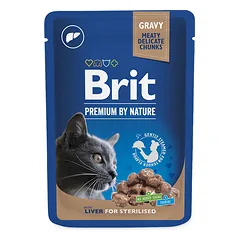
Brit Premium
0,33 €/kg
0,80 € / 2,4 kg
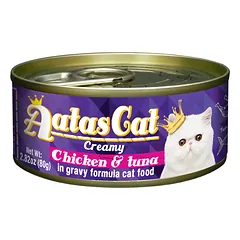
0,55 €/kg
1,05 € / 1,9 kg
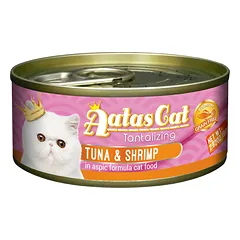
0,55 €/kg
1,05 € / 1,9 kg

Tigerino
0,87 €/kg
20,89 € / 24 kg

Gourmet
0,94 €/kg
0,96 € / 1,0 kg
Fitmin for Life
1,00 €/kg
0,80 € / 0,8 kg
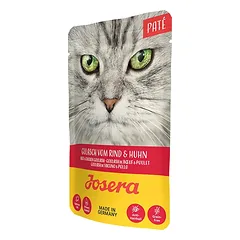
Josera
1,10 €/kg
1,49 € / 1,4 kg