


Burmese vs Manx
Compare two breeds
Pick two breeds to see them compared side by side.
Category III — Shorthair
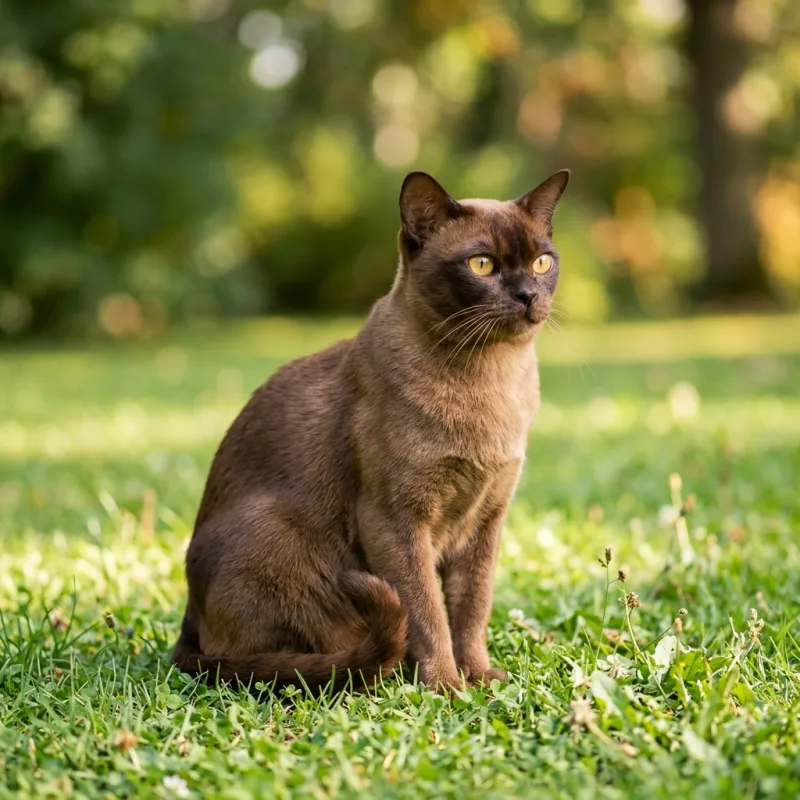
Burmese
The Burmese was developed in the West in the twentieth century from a cat brought from Burma and its descendants, which is where the name comes from. The short, smooth, satin-like coat lies close to the body and needs almost no grooming. Burmese cats are medium-sized but surprisingly heavy for their size because they are muscular, with males typically weighing around 4 to 6 kilograms. The breed is known for being devoted, seeking human company and being talkative, and it dislikes being left alone for long. The traditional colour is a rich brown, although other shades have appeared over time. Life expectancy is typically around 12 to 16 years.
Category III — Shorthair
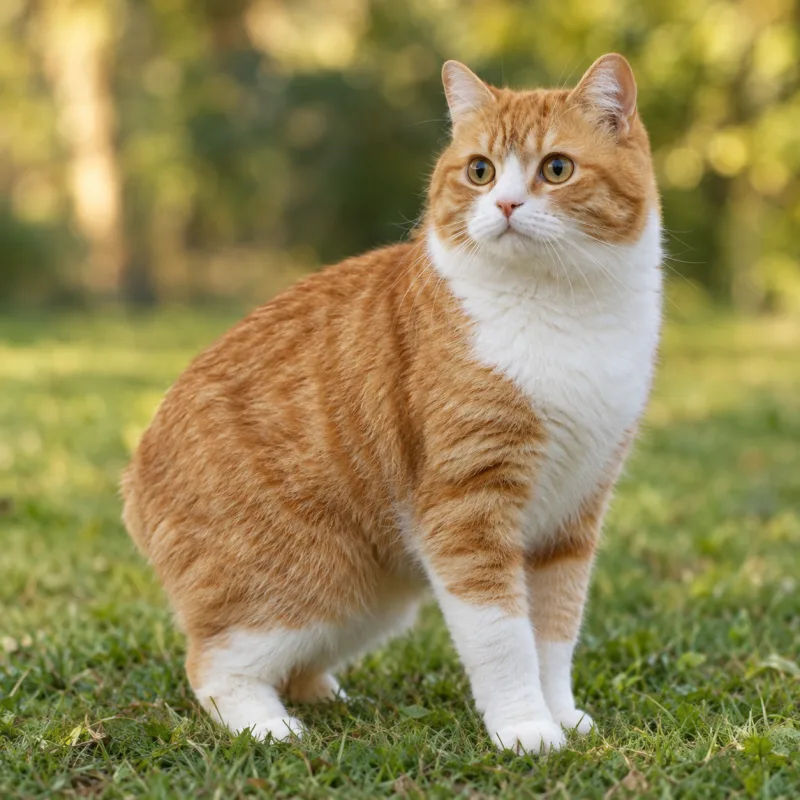
Manx
The Manx comes from the Isle of Man, and its trademark is the absence of a tail or a very short one, which arose as a natural mutation. Individuals range from completely tailless to ones with a full-length tail. The body is round and sturdy, the hind legs are longer than the front ones, and the coat is short, double and dense, so it is worth brushing more often while it is being shed. Adults typically weigh around 3 to 5.5 kilograms. Manx cats are usually friendly, intelligent and capable hunters, and they bond with their families. Life expectancy is typically around 9 to 13 years.
At a glance
| Burmese | Manx | |
|---|---|---|
| Weight (male) | 4.0–6.0 kg | 4.0–5.5 kg |
| Weight (female) | 3.5–5.0 kg | 3.0–4.5 kg |
| Life expectancy | 12–16 yrs | 9–13 yrs |
| Coat | smooth, short | double-layered, short |
Temperament & Family Life
| Burmese | Manx | |
|---|---|---|
| Family friendly | ||
| Good with children | ||
| Good with dogs | ||
| Friendly with strangers | ||
| Intelligence | ||
| Trainability |
Activity & Living Space
| Burmese | Manx | |
|---|---|---|
| Energy level | ||
| Playfulness | ||
| Hunting instinct | ||
| Apartment friendly |
Personality & Communication
| Burmese | Manx | |
|---|---|---|
| Affection | ||
| Independence | ||
| Vocality |
Grooming & Shedding
| Burmese | Manx | |
|---|---|---|
| Shedding | ||
| Grooming need |
Trait scores (1–5) are editorial estimates, not measurements — every cat is an individual.